The Chinatown Tour, Making Resistance Culture in These Times
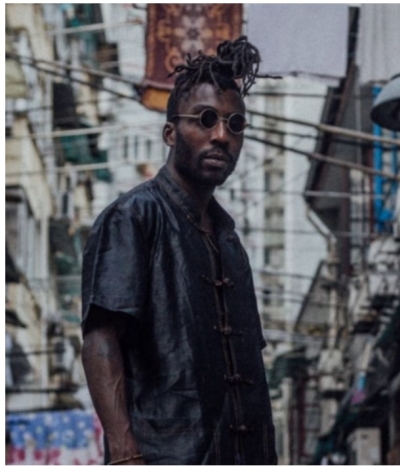
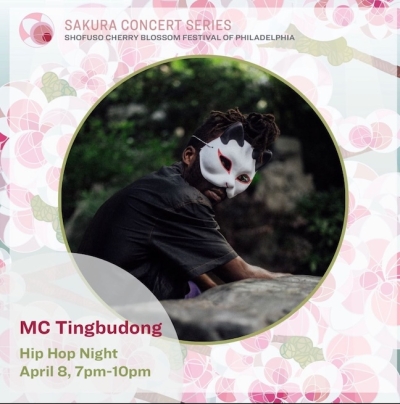
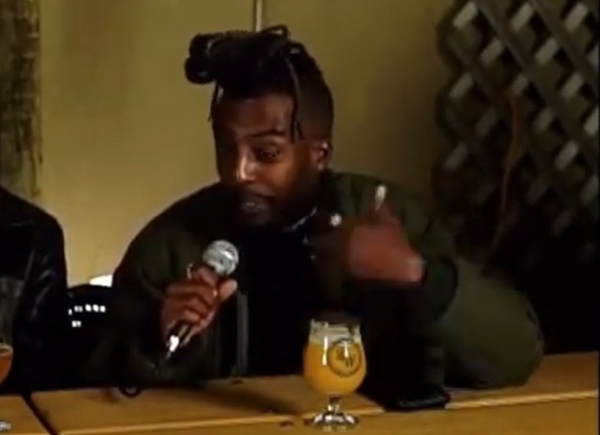
An Interview with Jamel Mims aka MCTingBuDong (abridged for MainlyPiano.com)
Date of interview: Sunday, March 29, 2025 | Interviewer: Laila Rahman / Editor: Steve Yip
©2025 Laila Rahman and
Not Fade Away: Preserving Overlooked AAPI Experiences. All rights reserved.
Introduction: Below is a new interview with the bilingual hip hop artist Jamel Mims, who performs as MC TingBuDong. This interview was conducted by Laila Rahman, a high school oral history intern, and has been edited for publication here. This edited interview updates an earlier
MainlyPiano.com interview with Jamel Mims in 2022. (A fuller version of this interview will eventually be published by the oral history project,
Not Fade Away: Preserving Overlooked AAPI Experiences, when it introduces its website soon.)
-- Steve Yip
Laila Rahman Hi, Jamel! So the point of this interview is to learn about your impact on the Asian community. So why don't you introduce yourself?
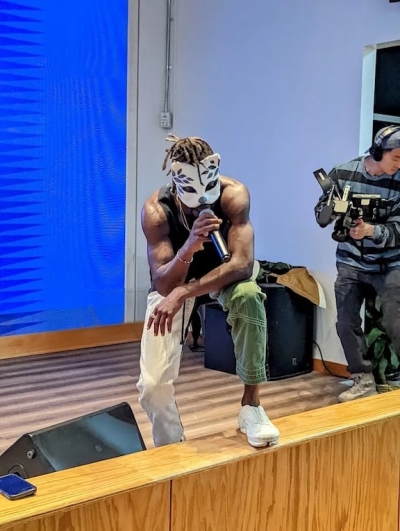
Jamel Mims Okay, so I'm Jamel Mims, aka MC TingBuDong [听不懂], and I'm a bilingual rapper and multimedia artist based in the Bronx, New York. Yeah, I would say that my work is really about connecting Black and Asian communities through music, examining the contemporary and historical connections between Black America and China.
Laila Rahman So as I was doing research, I learned that you took Mandarin in high school, which is very uncommon for high schoolers to do.
Jamel Mims Wild, yeah. I grew up in D.C. and went to a high school that had a Mandarin program since 1985... My entry point was through Japanese culture, anime, video games, all the things that were popular growing up.
Laila Rahman You take a lot of pride in being a bilingual rapper, and that's expanded throughout your career, and you use that to be part of the Chinatown Tour that you did with other rappers. What did that mean to you? And how do you think you've impacted others?
The Chinatown Tour Explained
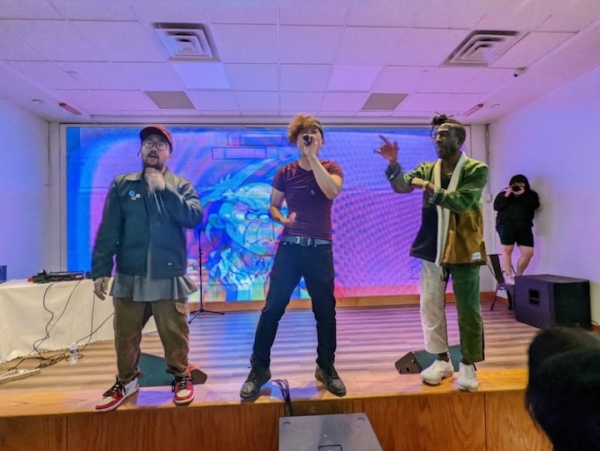
Jamel Mims Okay, you did your research. That's fun. The Chinatown Tour was a project that I put together with a good friend, Jason Chu, an Asian American rapper and activist. And this is coming out of the pandemic in 2020. We were looking at the COVID-19 pandemic, it was a time when two places were really hit super hard at the beginning of the outbreak in March 2020. And the stakes were high since it emanated from Wuhan, China. And then spread to ... Beijing, Shanghai, and then also in the United States, places like New York City, Washington, D.C. and it was affecting predominantly Black and Brown populations disproportionately. And so this is a time that the societal spotlight was really on the effects of this system and the pandemic, and it was exploding in such proportions on Black and Asian communities.
At the same time, we had the Atlanta spa shooting, where several Asian spa workers were gunned down through white supremacist violence. You had the George Floyd uprising, the Black Lives Matter movement, and the Stop Asian Hate movement. It's that cultural context that we conceived the Chinatown Tour as a way to envision Chinatowns, which had been besieged during the pandemic, where Donald Trump was calling the coronavirus the “China virus.”
We thought let's bring radical revolutionary culture and cultural movement into Chinatowns -- one that isn't just leaving Chinese and Asian people on their own; but that brings Black and Brown and Latino young people, the same kinds of people that have been like out in the streets, marching and demonstrating through places like Chinatown to “Stop the Asian Hate” and “Black Lives Matter”. Let's bring that culture and those people into Chinatowns around the country. And as artists, spearhead and gather some artists to do it. And so we were able to find funding in Philly and New York OCA. And we did the Tour in a couple of years in about five or six cities -- New York, Philadelphia, Boston, Houston. We also had a Delaware show. Yeah, we also did a kind of affiliated show in LA.
Laila Rahman You can tell that throughout your lyrics, your main goal was to unite people and to make people feel more connected. Especially in 2020, there was a lot of political unrest and a lot of tensions, a lot of anti-Asian hate going on. And so through your music, you are trying to dismantle that and try to make people feel more connected.
Jamel Mims Nailed it!
Laila Rahman So did you feel like the audience was different in any of the regions to record? Did you feel like certain audiences felt more impacted through your lyrics, or ...?
Bringing People Together in Uncertain Times
Jamel Mims It's a little different in each place. Let me start by identifying some key audiences with the Chinatown Tour, right? We were looking to bring together the audiences of Asian Americans who grew up in places like New York or Boston, Philly, Houston, and LA. Like your kind of third culture kids who grew up here but whose parents have immigrated to the United States. Or first or second generation all the way extending up to parents, to people whose families have been here for generations but still come from a kind of third culture background -- taking those young people as well as recent immigrants and international students that constitute the Asian diaspora who’ve been connected to a monoculture rooted in hip hop via the internet.
And so your international students that are going to school in places like Columbia University, which is totally under attack. And with green cards being revoked, that section of young people, as well as young people who are not themselves Asian but are concerned about these issues. Or are you concerned about Stop Asian Hate? Or are concerned about Black Lives Matter, but who are Black, Brown, and White who are concerned about these issues and have interests in Asian culture. Kind of like myself, who grew up with Dragon Ball Z and playing video games, and wanting to learn Japanese and Chinese. And so I was kind of bringing these three audiences together, and that was the goal around the Chinatown Tour. And I think there were different reactions to it from each of these groups. I think all of them were excited to be in the house and be there and be kind of connected through... the culture of hip hop and going, dancing, rapping, and kind of partying together. I think there's a lot of reverence that the folks who were of Chinese identity or Mandarin speakers have for somebody who is not of that background but who's taking the time to really invest in it. Because it takes time and stuff like that to invest in learning the language, etc.
The reaction from the Chinese community, or like the aunties, would be, ‘oh, you speak better Chinese than my son.’ So there's a whole dimension of peeps who have a lot of real respect for that -- a lot of the Black and Brown kids. I think they get a lot of inspiration from seeing somebody like me who is not from that background, but is well-affiliated with the culture. And similarly, there's a lot of ways in which Asian Americans or those from Hawaii get inspired by what I'm doing to bring these cultures together. And feel like being validated and seeing how I'm presenting and referencing cultures and languages that they grew up with, but then also, bringing in a political dimension that isn't commonly seen and like Mandarin-language music that's coming out of China. So it's a little bit different for each audience. But the overall thing is reverence, a lot of respect, and a lot of excitement to be in the house together.
Laila Rahman There are a lot of political issues that's going on right now. A lot of what's going on is trying to ignore all of the racial issues that we have and trying to forget that it even exist. I know I forgot where it was, but there was a Black Lives Matter [sign] painted on the sidewalk. And that's being painted over ... So I was listening to some of your music, and I saw that you wrote “Ahmed Mohamed” for the boy who was racially profiled. For allegedly having a bomb. And I wanted to know what motivated you to write a song that directly addresses them? And there was a lot of racism that followed this. And how did you just feel why you feel you had to address that?
Jamel Mims That's from way back... the first song I put out. Ahmed Mohamed was a Texas kid... This is like 2014, 2015, when Ahmed Mohamed was arrested for bringing a clock to school. At this time, I was working in schools on hip-hop education... I think the major reason why I felt compelled to speak about that, and towards political issues, making music in the first place. That had to do with how we're bringing in the energy that I see a lot in trap music and hip-hop music? There's a lot of anger that's righteous, but it doesn’t explain what is going on and where the source of all this outrage comes from. This is like in 2014 and 2013...
Transformation: Music of An Indignant Revolutionary
In 2008-2009, I got a Fulbright scholarship to study hip hop in Beijing. And that was kind of like the start of a lot of the work that I was doing as MCTingBuDong... So I began really as a researcher. And then, I wasn't making my music then. I was freestyling ... rapping, but I wasn't making my own songs ... And the inspiration behind it came from seeing ... how mass incarceration foreclosed the future of young people. Hearing a popular rapper Chief Keef in a song I heard that from the burgeoning trap music movement. This feeling of there being no future and hopelessness, but feeling like, how do we speak towards the source of that, and how do we guide people to get out of that, to take to the streets and get out of that? And so that became a lot of my motivation for making music.
We were going out on the streets and converting that experience into rap verses, and that's really where Ahmed Mohamed came from. This thing happened with Ahmed Mohamed, and the song wrote itself, like in a night after hearing about the incident... [about] the future of young people being foreclosed. But this is actually like a young genius, who's being treated and thought of as a terrorist,,, Like I wrote the song from the perspective of an indignant revolutionary... this entire system that forecloses the hopes of Ahmed Mohamed and millions more young people like him. And it kind of wrote itself once when that incident went down. I was writing and making a lot of music from that perspective.
Laila Rahman Very inspired by it... in your other song, “Ain't How” [got me] wondering, ‘what are you doing in these times’? And do you plan on making music to motivate people to fight back? Because the times are very scary.
Jamel Mims I think you described the situation very clearly... And so it is a super, super dangerous situation right now. And the short answer: I am making music that specifically addresses what we're going through now. And it's ... bringing sections of people together.
There’s a big TV show in China called
Rap of China. And they had their New York auditions here. And I shared a song that I wrote years ago that is loosely inspired by the Chinese national anthem, but that’s all about bringing sections of people together to fight fascism -- Black, White, and Asian folks... The point is that performances and music are needed now more than ever to bring people together against this. And it is the sort of thing where culture and art alone are not going to change the situation, but we need the art and the culture to change the minds of the people who are going to transform this situation.... It's not going to come down to us relying on the vote or relying on the law...
Laila Rahman Right now, we're just so divided. I feel like music is the one thing that people can become united together and share a thought. So what you're doing is impacting people. I thank you so much for having me interview with you. I'm very inspired by you and how you're taking action for using music as a way to unite people and take action against for political reasons, especially because it brings younger people together where younger people are a lot less likely to vote or take action into these things. We're most directly going to be the people who are affected by the policies that are being made. So I'm inspired by you. Thank you for having me do this interview.
Jamel Mims Are you kidding me? Thank you for thinking of me. Thanks for hitting me up. And I'm tremendously inspired by what you're doing with this project.
-30-