I don’t know why I didn’t think of it before, but I recently decided to interview two of the sheet music transcribers that I’ve had the pleasure of working with (I proof-read) for the past several years. The first is John Zechiel, who does a lot of transcription work for many of the artists on the Whisperings Solo Piano Radio broadcast as well as many other musicians. John does really outstanding work, and I was anxious to get to know him better. We did this interview via email the last week in April 2026. Enjoy! (The second transcriber I will be interviewing is Marcia Wells whose focus is quite a bit different from John's. Watch for that one in the next week or so.)
KP: Hi John and welcome to MainlyPiano.com! As I mentioned in the intro, we’ve been working on sheet music together for quite a few years - you as the transcriber and me as the proof-reader - and I thought it would be fun to get to know you better as well as to tell other artists about you and your excellent services. First, where are you located?
JZ: I’m located in Orange County, California.
KP: How long have you been transcribing sheet music?
JZ: I’ve been transcribing music since I was 14 years old, so 25 years now.
KP: Do you transcribe in any music genre or do you specialize in a specific style or styles?
JZ: I have transcribed and arranged music in just about every style you can think of, from classical piano music and Gregorian chant to bebop and Afro-Cuban jazz and everything in between. The one time I drew the line was when I was asked to arrange dubstep for solo piano. I had to turn that one down.
KP: I can certainly understand why!
Tell us a bit about the process of transcribing a piece of music.
JZ: Like anything, it just takes practice. If you do anything for long enough, it will eventually become second nature. As I matured as a musician, not only did the process become easier, but I also became more familiar with the notational conventions and what would make the sheet music easiest to interpret by the performer.
KP: Do you have to have perfect pitch to do this work?
JZ: I have perfect pitch and it certainly helps, but I know musicians who don’t and who’ve simply developed good relative pitch and can do excellent takedowns.
KP: Do you do orchestrations as well?
JZ: Yes, I can do orchestrations. The most fun work I do is actually when I’m commissioned to arrange for orchestra. The colors of the different sections and the variety of instruments allow me to be the most creative. When I’m asked to do orchestral transcriptions (not arrangements), this tends to be the most challenging work, as picking out all the various instrumentation is near-impossible to do with 100% accuracy, so I normally warn the customers in advance that there will be a certain degree of arranging involved to create the closest approximation I can.
KP: Do you use special auditory equipment to slow the recordings down or double-check notes and chords that are difficult to hear?
JZ: Nope, I do everything by ear. I know the tools exist to slow down recordings while maintaining the pitch, and I know there are other tools that can pick out the various frequencies and wave forms in a given audio sample, but I’m such a Luddite, I find it easier to just rely on my ear.
KP: Even though I’ve been proofing sheet music for going on 25 years, the transcription process is still a bit of a mystery for me. Do you listen to the recorded piece several times before starting the transcription or how do you prepare?
JZ: I usually listen to the piece one time in its totality at the beginning of the process to get a sense of the overall form of the piece, the key center, if there’s any ambiguity in the meter, or any other surprises. If it’s a song with lyrics, sometimes I’ll type out the lyrics in an initial listen-through so I can have those to reference. If it’s an orchestral transcription, I’ll make a list of all the instrumentation I can hear before I begin. At that point, it’s just starting at the beginning (it’s a very good place to start.) If it’s a piano transcription and the hands have clearly delineated lines, I’ll usually transcribe just the right hand first and then go back and transcribe the left hand. If the lines are more interwoven or the harmonies are thicker and comprised of spread voicing, I’ll transcribe the hands together. For other ensembles or combinations of instruments, usually what I begin with is what is clearest and most audibly present, or absent that clarity, I’ll start with what’s most crucial to the harmony – usually the bass part. Then I’ll go to whatever’s got the melody, and then fill in the inner voices that complete the harmonies.
KP: Interesting! Do you transcribe piano music primarily or do you do transcriptions for any instrument?
JZ: Since piano is my primary instrument, that’s what I mostly transcribe for, but I’ve transcribed for Uilleann pipes, duxianqin, and everything in between.
KP: What about choral music?
JZ: Yup – I have master’s degree in music education with an emphasis in choral music, so I’ll regularly transcribe for SATB, barbershop quartet, and other vocal ensembles. I also work with the high school choirs at Mission Viejo High School and am one of the staff musicians at San Clemente Presbyterian Church where I accompany their choir.
KP: Have you had special training to do this work?
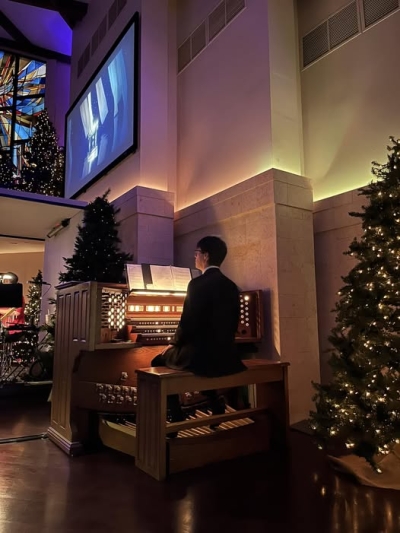
JZ: I didn’t have any “special” ear training in particular, other than what I picked up over the years. In terms of formal training, I was in the piano conservatory at the Orange County High School of the Arts, and then was an organ major at the Thornton School of Music at USC, where I took a number of music theory classes, orchestration classes, songwriting classes, and courses in keyboard collaboration.
KP: How can people who are interested in your services reach you?
JZ: They can visit my website at zechielmusictranscription.com
KP: Okay, let’s talk about YOU a bit! Where were you born and where did you grow up?
JZ: Born and raised in south Orange County, California.
KP: How old were you when you started playing music yourself?
JZ: I started taking piano lessons at age six and organ lessons at age eight.
KP: Which instruments do you play?
JZ: Piano, organ, clarinet, and I sing baritone.
KP: Do you perform, too?
JZ: I play piano and organ at San Clemente Presbyterian Church every week, where I also help design the liturgy and do all the charting for the other musicians.
KP: Have you ever worked for any of the music publishing houses or have you always worked independently?
JZ: I have always worked independently as I’ve never had problems getting enough work going directly to my clients.
KP: That’s impressive! Do you compose music, too?
JZ: I rarely compose original music anymore, but I do enjoy arranging music, especially variations on Christmas carols – both instrumental and choral.
KP: Did you take piano lessons as a child?
JZ: Yes – as ALL children should!
KP: Did you play in any rock groups?
JZ: I did have unkempt hair, but I was never cool enough.
KP: What drew you to music transcription? It must have saved you a TON of money to not have to buy sheet music!
JZ: It was actually kind of a fluke how I got started – my father had a coworker who had written an original musical and was looking to get sheet music produced. My dad, knowing I had a good ear, kind of put us together and had me help him create the vocal lead sheets based on his rough recordings. The next summer, I told him I wanted to go out and get a summer job working at the local water park. He responded that I was “much too talented to waste my time in a parking booth” and suggested building me a website where I could advertise transcribing music for people. He was a software engineer and web developer and quickly figured out how to do search engine optimization and build me a little website. I think that summer I had maybe four or five clients, and the business slowly grew through high school and college to the point where when I graduated, I was able to just do this full time.
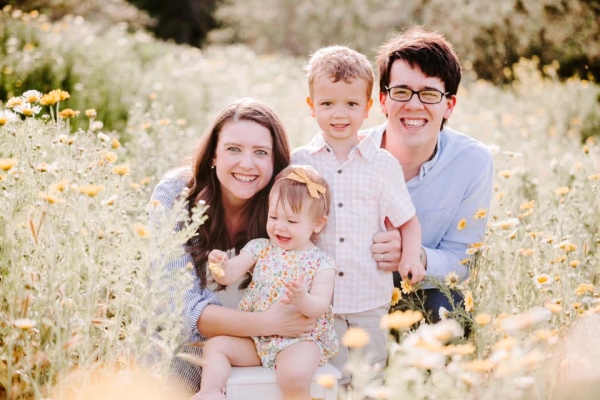
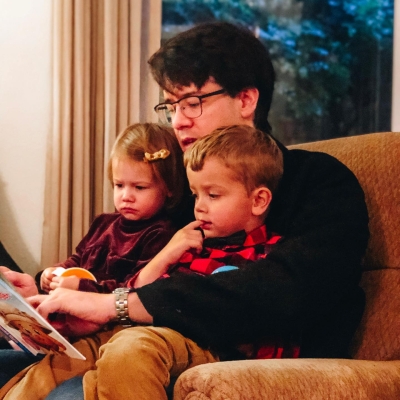
KP: Interesting! How old are your kids?
JZ: Eight and ten.
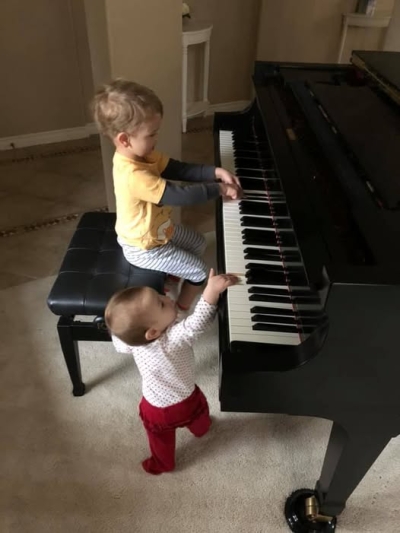
KP: Are either of them showing an interest in music?
JZ: My wife and I sing to them constantly, so they’re both good singers. They’re also both taking piano lessons right now (not from me), and showing a lot of promise. My eldest worked his way through a couple of the Bach inventions and just started on the Moonlight Sonata. He also is playing the viola in school.
KP: He definitely sounds like a budding musician!
What kinds of things do you enjoy doing when you aren’t transcribing?
JZ: Listening to Dodger games on the radio, playing board games with friends, reading books on theology or other obscure interests, and spending time with my family.
KP: Who are some of your own favorite composers?
JZ: When I was in high school, I was very much drawn to the Russian post-romantics, specifically Rachmaninoff, but also Tchaikovsky, Prokofiev, and Stravinsky. In college, I spent a lot of time in the French organ tradition, specifically Messiaen, but also a deep love of Duruflé. As I’ve gotten older, I find myself appreciating the Baroque composers more and more.
KP: If you could have any three wishes, what would they be?
JZ: I should not be given this power.
KP: Haha! Is there anything else you’d like to “talk” about?
JZ: Thank you so much for the opportunity of sitting down with you and hearing my story. It’s been a genuine pleasure working with you over the years.
KP: Thanks, John! Likewise!
Many thanks to John Zechiel for taking the time to do this interview! For more info about John, be sure to visit
his website and his
Artist Page here on MainlyPiano.com!
Kathy Parsons
April 2026