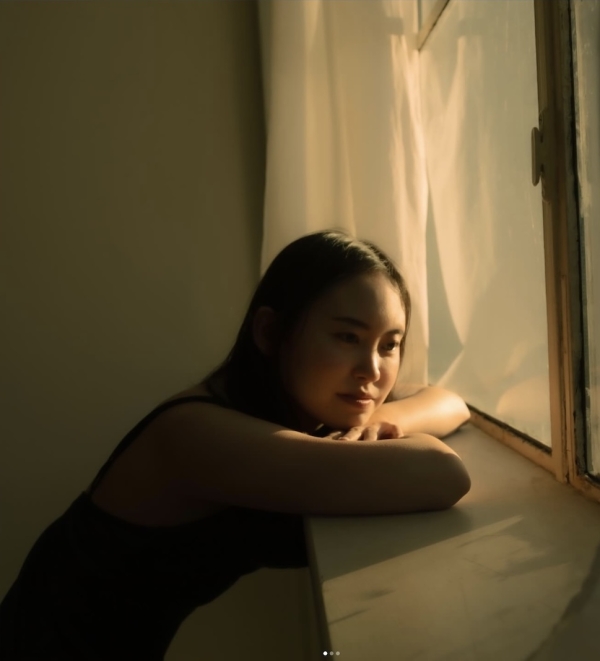
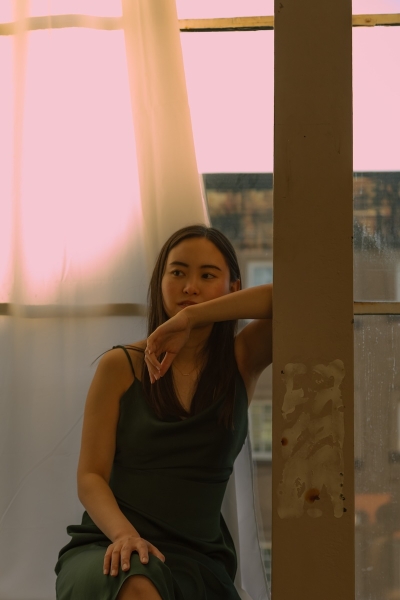
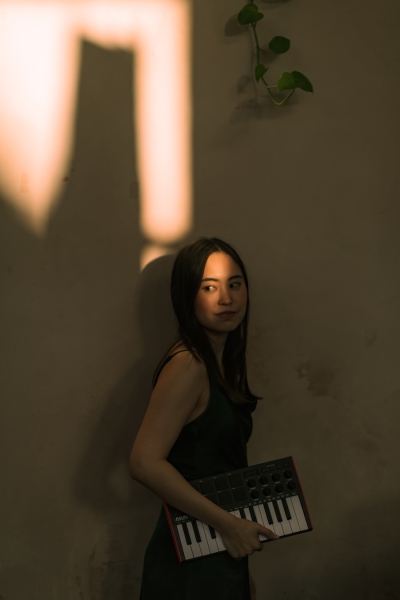
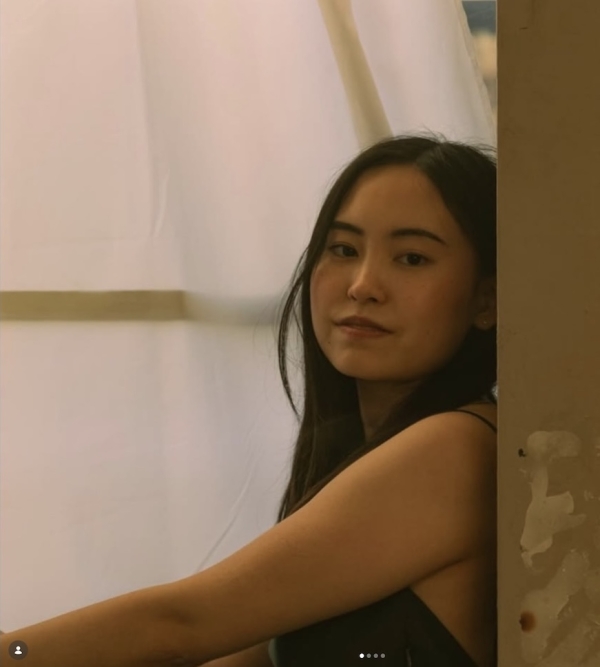
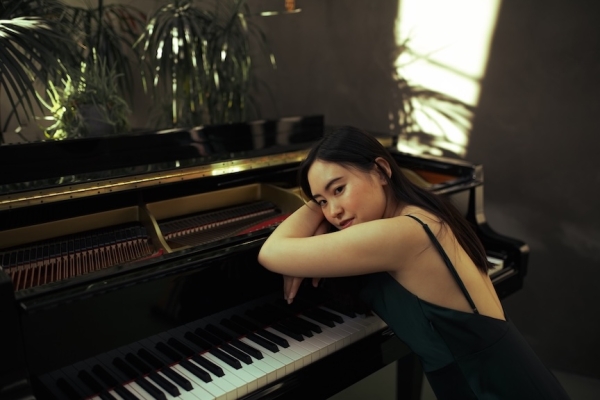
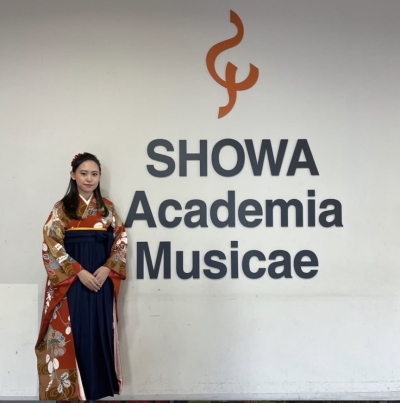
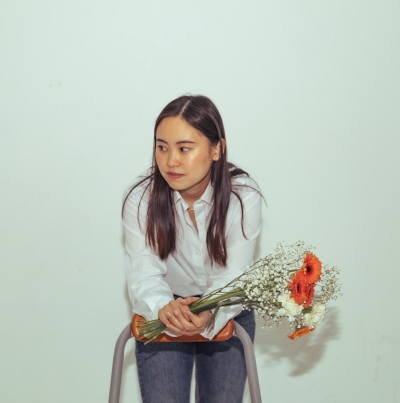
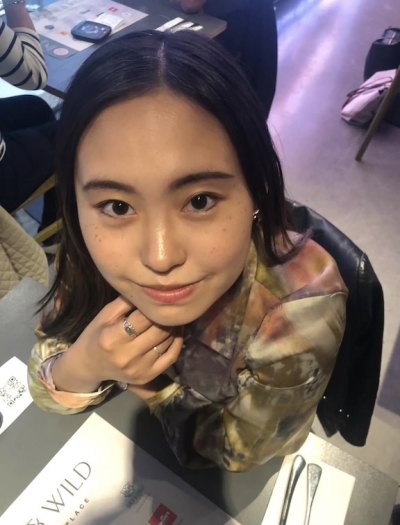
One of the joys of working on MainlyPiano.com is reviewing new music I probably would have never found otherwise and becoming aware of exceptional new artists. Ryoka Hagiwara is one of those artists! Ryoka released her debut solo piano album,
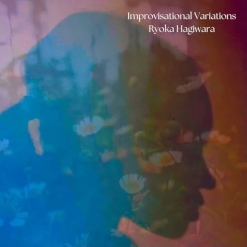
ICHI, the end of February 2026. She had previously released one single, “Improvisational Variations,” in 2024 and two singles from
ICHI - “In a Haze” and “Oil On Canvas, 2000” - more recently. She started classical piano lessons at the age of two(!!!) and is now working on her PhD in Germany. It is my pleasure to introduce you to Ryoka Hagiwara!!!
KP: Hi Ryoka! Where are you these days and how are you doing?
RH: Hi! I’m doing well, thanks - splitting my time between Scotland and Germany at the moment, doing music and musicological research.
KP: You very recently released your debut solo piano album, ICHI. First, what does the title mean or refer to?
RH: “Ichi” is a Japanese word that first and foremost means “one”, as in the number one. As this was my first album, it was quite fitting. But at the same time, depending on how you write it, “ichi” can also mean the word “position”. When I set out to create this album, my intention was to express and show, vicariously through my music, where I am right now. So I guess the double meaning made sense, both separately and in tandem.
KP: It definitely makes sense! I found it very interesting that the album was funded by Creative Scotland in conjunction with The National Lottery. Tell us about that.
RH: Creative Scotland has a wonderful fund for creatives called the Open Fund for Individuals, which creative practitioners can apply to on a rolling basis year-round. I applied in 2025, and was fortunate to receive funding for the recording and marketing for
ICHI!
Click on the album cover to go to Kathy's review.
KP: The eight tracks on the album are quite different from each other. Were they composed over a long period of time or fairly close together?
RH: Some of the pieces, such as “Restraint,” were written in 2023 and 2024, but generally they were all written back-to-back in early to mid-2025. I had hit a small creative block after finishing my Master’s final project in summer 2024, which was a 25-minute octet. I would say composing a bunch of shorter solo piano pieces for this album was very refreshing, in a way.
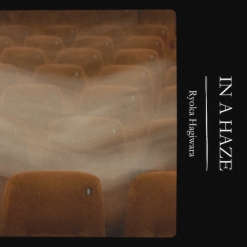
KP: I can imagine! You have released two singles from the album so far - “In a Haze” and “Oil on Canvas, 2000.” Let’s talk about “In a Haze” first. In my review of the album, I said “‘In a Haze’ is much gentler, beautifully describing the feeling of wandering aimlessly, not really aware of what’s going on around you. This could be due to dense fog or being lost in a fog of thought or emotion.” Is that at all close to your intention with the piece?
RH: I think so! “In A Haze” is roughly broken up into three sections: thinking about a memory, the memory itself, and coming back to the present. There’s certainly an aimlessness to reminiscing just for the sake of it, but there’s also the beauty of being allowed to be completely lost in your thoughts, especially in today’s busy world, where everyone and everything is trying to catch your attention. I felt that beauty when I was on a long-distance train ride with no internet, and I wanted to capture that.
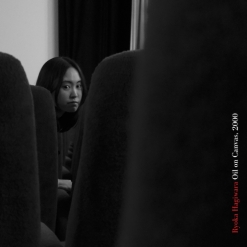
KP: The other single, “Oil On Canvas, 2000,” also has a
music video that tells quite a story about trying to get started with a blank canvas. What is the story or intention with this piece?
RH: This piece is effectively some sort of identity crisis. Having moved around the world as a child, I often feel that a lot of memories are fragmented and experiences compartmentalised, which makes it hard to build a “full picture” of who I am as a person. That can be a daunting experience, which I’m sure a lot of people can relate to one way or another, especially as a young adult. It’s that slight dread and anxiety that I wanted to express with this piece.
KP: It’s a very quiet and introspective piece that expresses powerful emotions, and it’s my favorite track on the album. I was a fine arts major in college, so I could relate to the story being told in the video. I’m sure it’s a similar feeling when sitting down at the piano with a blank sheet of manuscript paper!
RH: That, too! As I mentioned, this album was written off the back of what felt like a creative block, and a blank canvas is always intimidating for me, whether it’s music or writing.
KP: Believe me, I understand! “Table For One” feels so sad and lonely. What inspired that piece?
RH: I’m a massive foodie, and I do often go for dinner on my own. I know some people think that’s cool, some people find it awkward – for me, I quite like it. Once in a while though, I find it a little lonely, especially when I’m walking into a really bustling place and say, “table for one, please”. That was where the piece originated, and then it blossomed into something that represented loneliness in general. I don’t actually think eating alone is as sad as this piece would lead one to believe; it was just a fitting title, as that was what set off my train of thought to begin with.
KP: The album begins with “Obsessed,” which I described as “a very dark, mysterious and sometimes sinister musical portrait of a tortured soul.” What inspired that one?
RH: “Obsessed” is about rumination and anxiety (anxiety certainly seems to be a recurring theme here…), something that I struggle with quite often, about various things. It’s when you’re trying so hard not to think about something because it’s intrusive or just straight-up getting in the way, but the more you try not to think about it, the more you end up thinking about it. That cycle where it feels like your thoughts aren’t even yours anymore and instead it feels as though they are a separate entity chasing you. This piece is a portrait of that, which I guess makes it somewhat disturbing.
KP: “Restraint” feels very introspective, but also rather sad. Tell us about it.
RH: This piece was originally a piece for orchestra and piano that I wrote in 2023! It was performed, but I wanted to record it professionally, so I converted it to solo piano. The “restraint” referred to in the title can be on a conscious or subconscious level, but it’s about emotions that seem to ebb and flow like tides, thoughts that might cross one’s mind but not necessarily make it out of one’s head.
KP: “Vector” expresses a variety of moods and goes through several changes. What’s the story behind that piece?
RH: “Vector” was one of the first pieces I wrote, actually. I wanted to add some rhythmic texture to the album, so that was the inspiration behind this piece. Even though I realise that I have a tendency towards more mellow, melodic compositions, this was a lot of fun to write and play.
KP: “Interlude” is perhaps the most melodic of the eight tracks and is also a favorite. Does it have a story?
RH: I’m glad you like it! I think this was one of the first pieces I wrote for the album, but from the beginning I knew it would sit nicely in the middle. The first part of the piece and the second half of the piece were written completely separately, as two segments for different pieces, but I realised they went quite well together.
KP: “Crosscurrents” is the most energetic of the pieces, although it has quiet moments, too. Tell us about that one, and then we’ll chat more about you.
RH: “Crosscurrents” was another experiment in rhythmic textures. It was inspired by the jazz pianist Hiromi and jazz-classical crossover composers like Nikolai Kapustin and Alexander Rosenblatt. I also wanted to play with contrasts with this piece, hence the fairly sudden quieter moments.
KP: I love getting insight into the music from the composers, so thank you for that!
I understand that you were born in Japan, grew up in London, and are now based in Scotland. What has it been like to live in such diverse cultures?
RH: That’s been quite interesting for me. As I think I’ve mentioned previously, it has resulted in somewhat fragmented memory and identity, as well as compartmentalisation. I believe I think and act slightly differently depending on which language I’m speaking, for example, as I’m native in both Japanese and English. But overall, it has definitely been an enriching experience, and I’ve been very fortunate.
KP: Fascinating! I also read that you started playing the piano and composing music at the age of two. How is that even possible? I don’t doubt it - it’s just so unusual!
RH: My parents had a piano in the house so I always used to bash about on it when I was little. I started taking lessons properly when I was two. I’m not sure I could say I composed a piece when I was two, but I definitely enjoyed improvising – perhaps more than I enjoyed actually practising my classical pieces!
KP: When did you start competing as a classical pianist?
RH: I think my first competition was when I was in third grade in Japan, so when I was eight or nine? I played Haydn’s Piano Sonata No. 1 in G major, if I remember correctly.
KP: Impressive! I love that your music is often a blend of musical styles - jazz, classical, pop, ambient, etc. Have you always had an eclectic approach to music?
RH: Thank you. I don’t particularly believe in genres; although I understand they can be helpful from a marketing perspective, I think they can be quite limiting creatively.
KP: I couldn’t agree more!
RH: I also enjoy listening to music regardless of genre or style, and like to think that I can draw inspiration from literally anything, so there’s that!
KP: I get so frustrated by the US’s marketing insistence that all music needs to fit into one specific genre. It IS very limiting and stifles a lot of creativity for fear of not fitting in anywhere. It’s one of the main reasons I’ve been reviewing so much music from Europe. There seems to be a lot more creative freedom in the arts there. Okay, I’m off my soapbox now!
You have also written music for short films. Let’s talk about that a bit.
RH: This was something I got into when I was doing my undergrad, and I did quite a few during my Master’s. One of the films, ASTER, has been/will be shown at various film festivals around the country, which is quite exciting. I really like being inspired by narrative, whether it’s in music, visual art, literature, or the moving image, and it’s always a joy to collaborate with other artists, including filmmakers. And with film, I also love watching the process. For example, ASTER is a stop-motion film, and I had so much fun watching the puppets come to life!
KP: I’ve read you also play keyboards for recordings and live shows with other artists. What have been some of those projects?
RH: In Tokyo, I regularly played the piano at monthly acoustic concerts for a boy band. That was a lot of fun, and it was a relaxed atmosphere. I got to arrange the songs for that as well! I really do like playing with other artists, partially because it’s a process that I didn’t get to do often as a classical pianist.
KP: You earned an undergraduate degree in piano performance and creative music practice from the Showa University of Music in Japan and a Master’s (with Distinction) in composition from the University of Edinburgh in Scotland. Now you’re working towards a PhD in musicology and transcultural studies at Heidelberg University in Germany. Do you plan to teach at the college level?
RH: Potentially, if somebody will have me! I find that research often informs and contributes to my compositional practice greatly, and I like to keep an open mind and be curious. This has posed troubles for my PhD (as I think it does for a lot of researchers!) of going down a fairly deep but, for now at least, unnecessary rabbit hole… As for teaching, I was very lucky with my own musical education, and I think teaching is the best way to contribute back to society.
KP: I taught piano lessons privately for forty years and loved it.
You also do a lot of writing about music. How long have you been doing that and how do you choose what to write about?
RH: I’ve been writing about music on and off in various settings (for fun, academically, or professionally) for several years now, but I’ve been writing reviews for different publications for just over a year. I like to listen to all kinds of music, and working for publications, I get exposure to new music that I wouldn’t come across otherwise. I’m always slightly overwhelmed with the amount of new music that I would ideally listen to, but don’t necessarily have the time for!
KP: Me, too!
Do you also teach piano and keyboard?
RH: I’ve taught on and off over the years. I started teaching piano when I was in undergrad, and it’s always a joy to watch students get better and enjoy playing a piece. Teaching is both rewarding and gratifying. And kids are cute, so that’s a bonus if I’m teaching a bunch of youngsters – even if a group class can be utterly chaotic!
KP: Again, I completely agree!
Who or what are some of your strongest musical influences?
RH: I think as far as piano playing goes, the composers that were constantly in my repertoire, and thus I played a lot of pieces by. That would be the likes of Bach (I went through all the pieces in The Well-Tempered Clavier in junior high school and high school!), Mozart, Chopin. And a decent amount of Arnold Schoenberg during my undergraduate course. Because I played so many pieces by them and so often, I think my hands are accustomed to the way they write! And because I write my piano pieces at the piano, that’s the way my hands like to move, semi-automatically. I also absolutely love Hiromi, the jazz pianist – she’s just got so much energy and seems to be having so much fun with music, which I adore. Songwriters-wise, Ringo Sheena and Yoshiki Mizuno have constantly been influences. I’m sure I could come up with a lot more!
KP: Who are some of your favorite composers (from any genre)?
RH: Aside from the aforementioned… Ryuichi Sakamoto, Arvo Pärt, Toru Takemitsu, Joe Hisaishi. I cherish the harmonies of Keith Jarrett too, and of course his improvisational abilities. The list really could go on.
KP: What has been your most exciting musical moment or experience so far?
RH: There are a couple of classical concerts that have really stuck with me. One was Maurizio Pollini playing Beethoven’s Hammerklavier Sonata in Tokyo, sometime around 2012, I believe. The whole sonata felt absolutely electric, especially the third movement. Another was seeing Krystian Zimerman playing Chopin’s Sonata No. 3, also in Tokyo. This was in late 2021, and that was genuinely the best live performance I have seen of that piece to date (and I’ve seen it being played A LOT…). For stuff that I’ve done, I would say creating this album was pretty big for me!
KP: Is there a particular philosophy that you try to convey in your music?
RH: This really depends on the project, but I do think a degree of authenticity and vulnerability is important for my creativity. I often feel that I’m not amazing with expressing myself with words, and I think music can convey subtle nuances that I couldn’t capture with words. I also really enjoy that instrumental music is often up to the interpretation of the listener – it’s nice to think that listeners can put their own spin on my work. I love that, upon release, it can have a life of its own.
KP: What kinds of things do you like to do when you’re not doing music?
RH: Reading, watching movies, going for a walk, eating… I also don’t know if this is necessarily healthy but I’m bad with silence, so this is usually accompanied with an audio component, like listening to music, podcasts, audiobooks, radio, even white noise sometimes (I’m trying to break this habit though!).
KP: If you could have any three wishes, what would they be?
RH: I’m going to limit myself to music-related things so that I don’t go overboard. One would be that anybody can have the musical education they desire at any point in their life. Another would be that anybody around the world could have an abundance of musical experiences, whether it be recordings, live music, interdisciplinary performances, etc. Finally, I wish that the music industry would be a fairer and safer place for everybody involved.
KP: What’s up next for you?
RH: I really get a kick out of doing collaborative work, and because ICHI was a solo piano album that was largely self-produced, I would love to work with other musicians and artists for my next project. I’m also working on my PhD!
KP: Is there anything else you’d like to talk about?
RH: I just wanted to say, thank you so much for this interview, Kathy! I really enjoyed it, and I hope your readers will as well.
Many thanks to Ryoka Hagiwara for taking the time to do this interview! For more info about Ryoka and her music, be sure to visit
her website and her
Artist Page here on MainlyPiano.com
Kathy Parsons
March 2026