Happy New Year, Everyone!
While 2025 wasn’t a bad year, it had quite a number of challenges, so I’m happy for a fresh start and hope you are, too! I have a few odds and ends as well as the usual articles this month, so let’s get started!
The first composition written specifically for the piano was Giustini's "12 Sonatas for soft and loud harpsichord" in 1732.
The first book about piano technique was written by C.P.E. Bach, son of J.S. Bach, in 1753.
The first performances of piano solos in concert were by J.C. Bach (one of J.S.Bach’s sons) in London and Henry Walsh in Dublin, Ireland in 1762.
New Reviews: We added another interesting assortment of new reviews in December. One that I particularly enjoyed doing was the 50th Anniversary Edition of
Keith Jarrett’s Köln Concert. If you don’t know the backstory of that album, be sure to check it out. Before the concert, everything that could go wrong did, but that album went on to become the best-selling solo piano album of any genre as well as the best-selling solo jazz album ever.
The first Japanese pianos were built in 1885 by Nishikawa and Sons.
In the 1920's, before the radio became the main source of entertainment in American households, and long before television, there were more player pianos in the US than regular ones.
Louis Braille, an organist, originally invented Braille as a way for blind people to read music.
2025 By the Numbers: It was another very busy year at MainlyPiano.com. We added a total of 211 reviews of albums, EPs and singles; 14 songbook and sheet music reviews; 8 interviews; and 4 articles and “other” reviews. We currently have a total of 3727 reviews of recordings, 437 songbook and sheet music reviews, and 298 interviews. 1273 artists are on the site. I can’t wait to see what the New Year brings!
In 1821, a "moderately priced" cabinet piano by Clementi and Co. was priced at $475. American pianos were priced around $200 and were considered to be very inferior to imported pianos.
The upright piano was invented in Philadelphia in 1800 by John Isaac Hawkins at almost exactly the same time it was invented by Mathias Muller in Germany. Hawkins was said to have also invented the ever-pointed pencil.
Early jazz pianist Jelly Roll Morton (born Ferdinand LaMenthe) had a gold front tooth into which a diamond was set.
New Interviews: As I keep saying, I have a bit of a backlog of interviews that I’ve promised to do, and I promise to get going on those in January.
Ignace Jan Paderewski gave the White House’s first full solo piano recital in 1902.
Harry S. Truman was America’s first pianist/president. He often played in public, and played on a televised tour of the newly-renovated White House.
Richard Nixon studied violin, clarinet, saxophone, and piano as a youth and continued to play the piano during his presidency.
Wishes List: If you missed the 2025 Holiday Wishes List, the link will stay on the MainlyPiano.com homepage until around January 10th. You also access it
here. Thanks again to those who participated!
W.W. Kimball was established in about 1865 as a maker of cheap, quick-selling pianos and organs. They eventually became the largest piano manufacturer in the world, and were owned by a furniture manufacturer in Indiana. Kimball stopped producing pianos in 1996.
As the Queen Elizabeth II was making its way to the Falkland Islands in the spring of 1982 during Britain’s conflict with Argentina, the crew dumped a Bosendorfer piano (one of the most expensive pianos) overboard to make room for a helicopter to land on the ship.
There is actually an injury called “glissando thumb” caused by pianists sliding their thumbs up and down the keyboard too often.
January Birthdays: I decided to do something a little different with the birthday listings and have added a variety of composers and musicians to those who are currently making new music. I hope you enjoy the change!
1/3: Victor Borge (1909-2000) & Stephen Stills (1945)
1/4: Bill Whitfield
1/5: Kori Linae Carothers
1/6: Greg Starr & Alexander Scriabin (1872-1915)
1/7: Cathy Oakes, Kenny Loggins (1948) & Francis Poulenc (1899-1963)
1/8: Stephen Peppos, Elvis Presley (1935-1977), & David Bowie (1947-2016)
1/9: Steve Rivera, Artyom Tchebotaryov, Joan Baez ((1941), & Jimmy Page (1944)
1/10: Jim Croce (1943-1973) & Rod Stewart (1945)
1/11: Mark Freshwater & Naomi Judd (1946)
1/12: George Duke (1946-2013)
1/13: Gwen Verdon (1925-2000)
1/14: Scott Cossu, Allen Toussaint (1938-2015), LL Cool J (1968) & Dave Grohl (1969)
1/16: David Thomas Roberts, Ethel Merman (1908-1984), Ronnie Milsap (1943) & Lin-Manuel Miranda (1980)
1/17: Eartha Kitt (1927-2008), Ryuichi Sakomoto (1952), & Kid Rock (1971)
1/18: Beverly Ritz, Danny Kaye (1911-1987), & David Ruffin (1941-1991)
1/19: Phil Everly (1939-2014), Michael Crawford (1942), Janis Joplin (1943-1970) & Dolly Parton (1946)
1/20: Huddie “Leadbelly” Ledbetter (1888-1949) & Slim Whitman (1923-2013)
1/21: Fiona Joy Hawkins, Placido Domingo (1941), Richie Havens (1941-2013) & Mac Davis (1942)
1/22: Tomaso Albinoni (1671-1751) & Sam Cooke (1931-1964)
1/23: Bernward Koch, Christine Brown, Rick Sparks, & Muzio Clementi (1752-1832)
1/25: Michael Logozar, Neil Diamond (1941), & John Belushi (1949-1982)
1/26: Rhonda Mackert, Maria Von Trapp (1905-1987), Stephane Grappelli (1908-1997), James Van Heusen (1913-1990), & Eddie Van Halen (1955)
1/27: Wolfgang Amadeus Mozart (1756-91), Jerome Kern (1885-1945), Bobby “Blue” Bland (1930-2013)
1/28: Louis Colaiannia & Artur Rubinstein (1887-1982)
1/29: Danny Wright & Frederick Delius (1862-1934)
1/30: Horst Jankowski (1936-1998) & Phil Collins (1951)
1/31: Franz Schubert (1797-1828), Philip Glass (1937), Carol Channing (1921), Mario Lanza (1921-1959) & Justin Timberlake (1981)
The International Piano Archives in Maryland is the only library in the world that concentrates exclusively on materials pertaining to classical piano music and its performance. It houses an estimated 96% of all commercial piano recordings ever issued plus taped copies of most of the remainder. It currently has 12,000 78-rpm records; 26,000 vinyl records (LPs); more than 4000 reel-to-reel and cassette tapes; more than 20,000 compact discs; 3000 reproducing piano rolls; 2500 books about the piano and pianists; over 25,000 piano scores; and many other items and collections.
Bartolomeo Cristofori was the keeper of the instruments in the Florentine Court. It was previously thought that he invented the piano in 1709, but he may have built the first one as early at 1694. He had sold three of them by 1711.
Little interest was shown for Bartolomeo Cristofori’s original piano, so he went back to making other kinds of stringed instruments. He died in 1731 at the age of 75.
January Music Holidays and Observances: Some of these are kind of silly, but I'm really looking forward to the last two!
January is National Polka Music Month!
1/1: International Public Domain Day
1/3 Women Rock! Day
1/4 Pop Music Chart Day
1/9 International Choreographers Day
1/13 Public Radio Broadcasting Day & Stephen Foster Memorial Day
1/20 National Disc Jockey Day
1/21 Mariachi Day
1/28 National Kazoo Day
1/30 Yodel for Your Neighbors Day
Until about 1750, the thumb was rarely used in keyboard playing. It was supposed to "hang loosely" below the keys. Movement around the keyboard was accomplished by crossing the 4th finger over the 5th, and the 3rd over the 4th or 2nd.
Printed collections of music for home use became fairly common in the 1730's.
Before the piano took over, the harpsichord was held in very high favor by the wealthy. It was used primarily as an accompanying instrument during the second half of the 17th century, but it also became popular as a solo instrument as composers began writing more music for it.
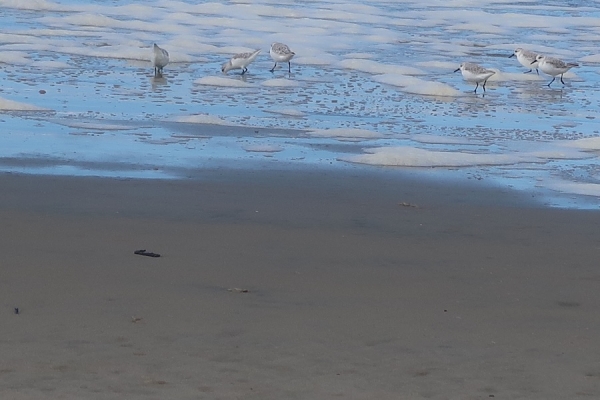
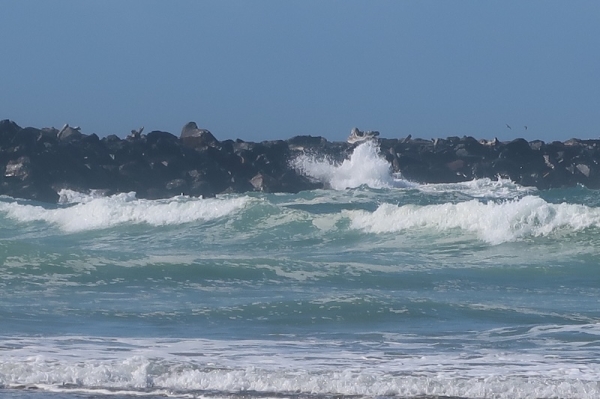
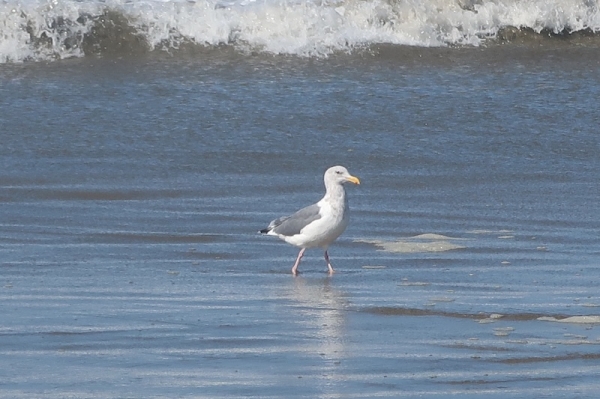
Wishing everyone a very happy, satisfying and productive new year! The photos this month are from our local beach here in Florence, OR. Thanks for supporting MainlyPiano.com! It’s a labor of love! Cheers!!!
Kathy
It is possible that the distinctive and powerful tone of Steinway pianos is due to the fact that Steinway and his sons all had hearing problems. They might have been designing pianos that they could hear.
In what is likely the first press interview with a musical instrument-maker, in 1711 Cristofori gave such a detailed description of his invention (the piano) that instrument makers all over Europe could duplicate his work and build their own pianos. The article was translated into German in 1725 and likely inspired pianos to be built in Germany as well.
In 1802, Muzio Clementi started traveling to the US, not as a performer anymore but as a sales agent for his own pianos and as a scout for music that his company might publish.
To the best of my knowledge, the "trivia" items are true, but I can't guarantee it.