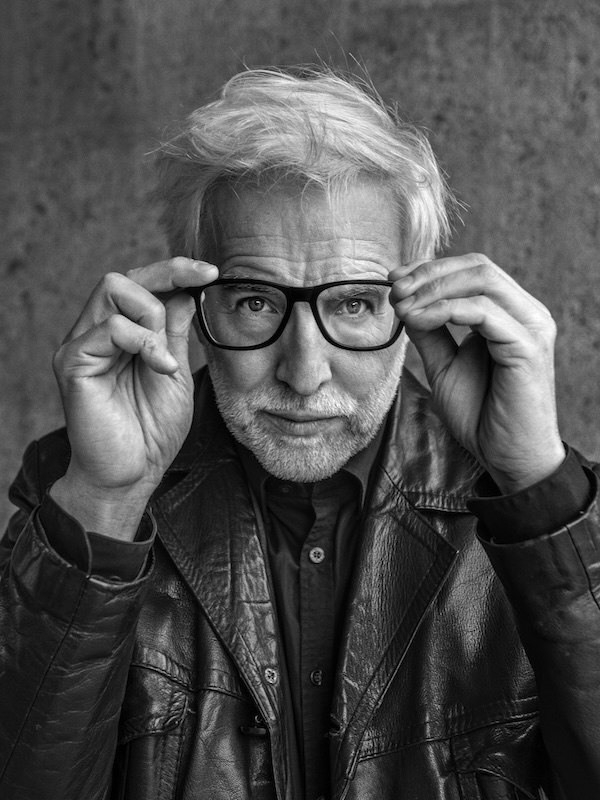
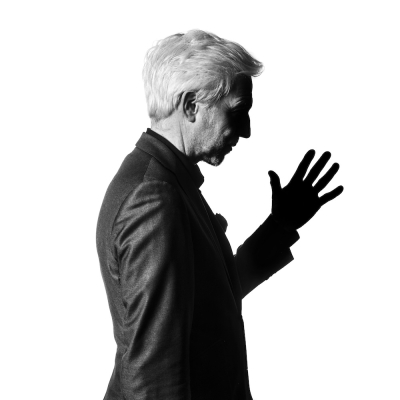
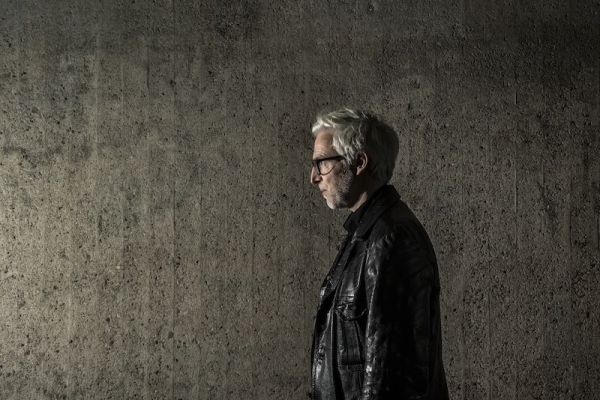
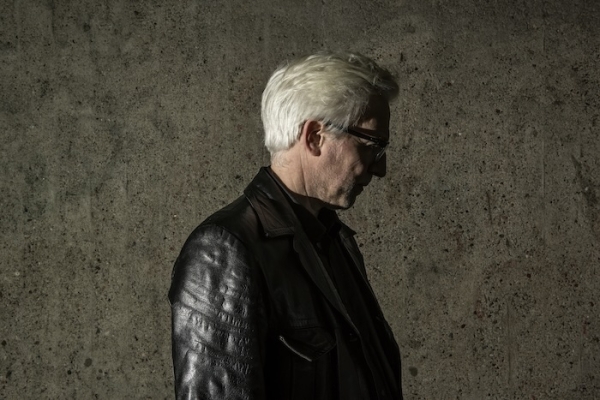
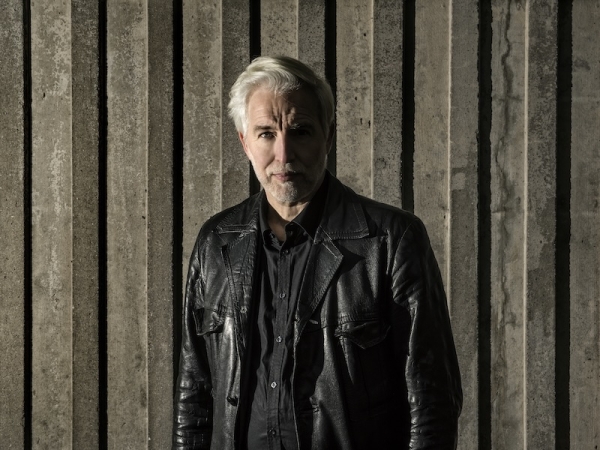
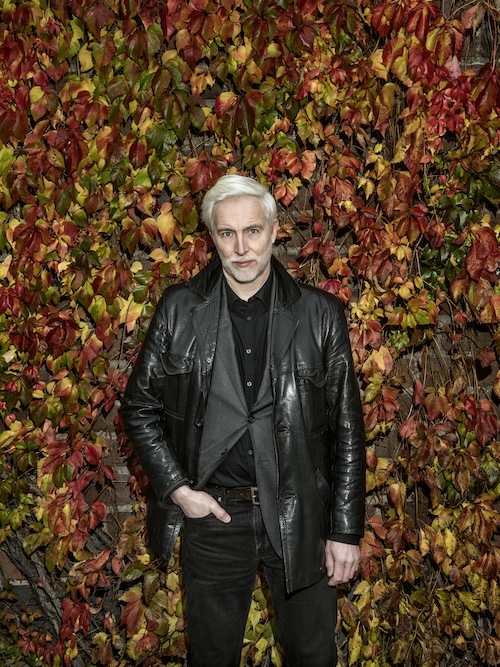
Carl Liungman is a Swedish pianist/composer that I’ve been reviewing since his 2020 debut,
Born. Carl is getting ready to release his fourth full-length album,
Tales, that concludes his auto-biographical tetralogy. He has also released an EP and several singles. I have thoroughly enjoyed all of Carl’s music and thought this would be a great time to get to know him better and help to bring his music to the attention of a wider audience. We did this interview via email in October 2026. Enjoy!
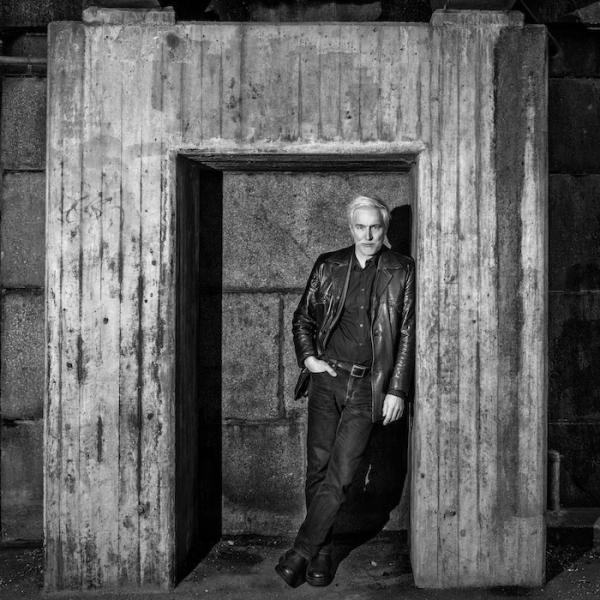
All photos of Carl by Johan Bergmark.
KP: Hi Carl! How are things in your part of Sweden today?
CL: Hello! The Fall has arrived and as a matter of fact, I like the vibe now more than the Summer time here. It feels more creative and poetic in a way with the forest in great yellow and red colors.
KP: That sounds beautiful! Tell us a little about where you live.
CL: I live in the countryside in the Southern part of Sweden (a South-North very wide/long country) some 250 km South of the capital, Stockholm. My house is a former village food store close to a railway and in a valley with lakes and forest-covered hills with cliffs and wilderness. Quite a dramatic and beautiful landscape.
KP: It sounds like it!
You are starting to release singles from your upcoming album called Tales, which is due out the week before Christmas. How are you choosing which pieces to release singly and how many singles do you plan to release?
CL: That’s right, I plan to release three singles before the album release on December 18th. I started the single releases by introducing the title track of the album “Tales.” It is one of the 13 pieces and I sense it is as a wrap-up of the storytelling in the album as a whole. The next single will be a quite different piece, more expressive and improvised. The “Tales” single is kind of a classical composed piece, but also with a pop song twist letting the more easy-going refrain contrast with the classical parts. The third single release will give the listener more of a Christmas feeling, a very soft and lo-fi piano piece.
KP: Did you have an overall theme in mind when you created
Tales?
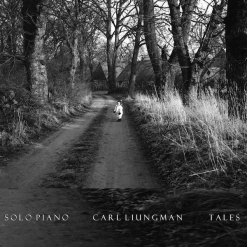
Not yet reviewed.
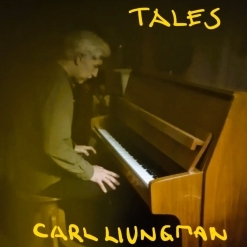
Click on album cover to
go to Kathy's review.
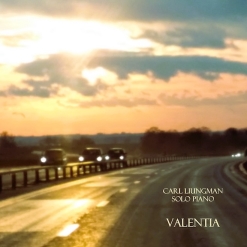
Not yet reviewed.
CL: Yes. It should reflect my journey in life so far. An autobiographic musical storytelling about hardships in life, love, loss and recovery and healing. Each piece is like a world in its own, and some pairs of the 13 pieces are connected like reflections of each other; like musical twins; different and alike.
KP: I know Tales is the fourth album in a tetralogy that includes your debut album, Born (2020), Shine (2022), and Change (2024). Did you originally plan to make it a series? If so, what was the inspiration?
CL: No, originally I planned to make the albums separate but in ways connected as parts of my musical autobiography. But as life “happens in mysterious ways,” profound things happened that affected my compositions and piano playing. My mother passed away in 2024 and in 2025 my father also left us. The third album, Change, was recorded at a live concert honoring my mother and my father and also described the changes in my life. After that album, I felt I had more to tell my audience musically. Therefore I gathered new material that had suddenly grown into a new album, but I felt something was missing. After my father’s death in April 2025, I didn’t play any concerts or any public piano gigs at all. During the year up until the Spring of 2026 I played some pieces on and on in my loneliness. I felt confused and my piano music was healing my soul. My girlfriend, Malin, gave me support to find a good music studio in Stockholm with a great Steinway B grand piano. I booked the studio and the pressure on myself to wrap up my fourth album was a positive one. In July 2026, I recorded the album Tales in the Yardhouse Studio, Tullinge, Stockholm. The studio producer, Gerhard ‘Kuno’ Kunosson, and the mastering producer, David Sales, did a wonderful job supporting my production when it comes to the outcome of the piano pieces as well as the crispy sound.
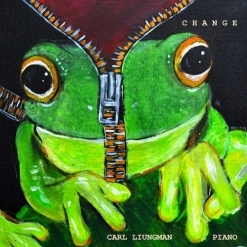
KP: I have to ask about the cover artwork for the Change album. I love it but why a frog?
CL: Thank you, it was when I saw that artwork by my girlfriend’s sister, Linda Carlbark, that I got the creative idea of breaking the style of the artwork of my former albums. Change was a profound change in my music-making also. Not only in my life, in all. So the green frog with a zip felt as crazy as creative to use as an album cover. The frog could also symbolize myself as the one get kissed to change into a man. A cliché maybe, but why not?!
KP: Why not, indeed!
I’ve read that you have used different pianos for each of your albums. How do you choose which pianos to use?
CL: I wanted to get different sounds on the albums and chose different pianos. The Fazioli grand piano in the ABBA Benny Andersson’s studio in central Stockholm is a wonderful instrument. But for the next album and an EP, I wanted a closer more lo-fi intimate sound and chose my Schimmel upright piano at home. The third album release was not planned to be a live concert, but as the concert hall in the old art museum of my hometown of Malmö contained a Steinway in great shape, and as I could get a good live recording producer in Carl Granberg, I chose to make an album of my 2024 concert honoring my parents.
I am quite an explorer of various upright and grand pianos. It has become almost like a sport to find a suitable piano with the right mechanics and sound. The Steinway B for my latest recording was newly restored by a well-known piano technician in Sweden, Jussi Karjalainen.
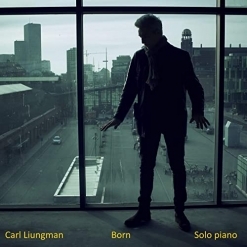
Click on album covers to
go to Kathy's reviews.
KP: You also released a four-song EP called Affection and Absence in 2023 that I love. What inspired the music for that one?
CL: Thank you for the compliment and for asking. This EP is quite forgotten and that is a pity because those four piano pieces feel very personal to me. The title gives a hint. Inspiration is from my hardships as a parent to one son, but also as a son myself to my own parents. Parental love can feel almost lost or impossible to manage sometimes, and other times it is the only thing you live your days for. A son that emotionally disappears from his father, and a father that does not know what to do about it due to his own wounds.
KP: I have read that much of your music is improvised and some is more composed. When you are ready to record, how much preparation do you do before recording and do you do much editing after recording or do the pieces stay as they were created “in the moment”?
CL: Also a good question! I am very well prepared when it comes to technique and being in good shape for the day. I have studied music composition and theory which helps me a lot when I improvise and create my piano pieces. My music is mostly composed, but the process to finish a song often derives from improvisation. For example, it could be a combination of chords or a simple minimalistic melody that I evolve into a musical storytelling. I feel progressions in the music when I improvise and here my knowledge in music theory guides me. I know what to play or what to combine to enhance a chord progression in a suitable way.
There are some piano pieces that stand out as more improvised. For example, on my EP Affection & Absence, the song “Affection” was made up by a two chord combo. The song “Disappear” was an improvisation in all. But almost all of my songs on my other albums are composed in all.
To answer you about editing, I can tell you I avoid “cheating” in making my piano recordings. Almost every song I have released is played from start to end without editing in the recording. But I can reveal that there are a few songs where I have erased some mistakes - nothing more than that. I have also chosen to put different parts together from different takes in a couple of my songs.
KP: Interesting! Let’s talk about some of the pieces on the new album. Tales opens with “Close,” a very heartfelt and rather somber piece. What was the inspiration for it?
CL: “Close” came up as a side project during the making of the album. I had a chord progression I couldn’t get rid of and in the recording studio I got the right feeling playing this song very slow and in dark/low chords. It is a song based on chords more than a melody, but then I found a little melody inspired by an ABBA song and put this melody in the song. The inspiration for “Close” is my father and the last conversations I had with him weeks and days before he died. The music is symbolic for wisdom and listening to an older mind. It is almost like a farewell when I listen to the song now 1 1/2 years after my father passed away in April 2025. The title could have been “Wisdom,” but I chose “Close” because it felt close with him and also like a closure. I have put this song as the opening of my album to introduce the listener to the somber atmosphere of my album. Closing will open the doors to my story.
KP: “Valentia” feels kind of mysterious and seems to have a Spanish influence. What inspired that one?
CL: This song is to me quite playful and romantic. When I was a kid I visited Spain and the country made an impression on me that has lasted. I chose the title “Valentia” meaning strength and bravery, but also the Spanish town Valencia close to where I went on vacations. Inspiration comes from my influences of both Bach and Chopin styles in my playing that I mix with jazz ad lib piano and Spanish chord progressions. It is a piano piece about reminiscence as well as searching for balance and presence.
KP: “Saudade” is defined as “a deep, melancholic longing for an absent person, place, or thing that is deeply loved,” and that’s the title of the third track on the album. What inspired that beautiful and very passionate piece?
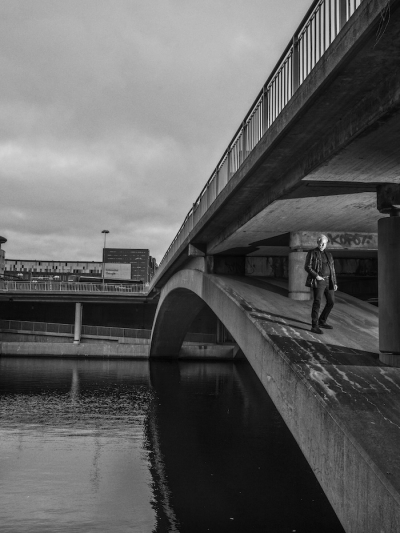
Carl on the Stockholm Bridge.
CL: This piece is a cousin of the piece “Valentia” both in tonality and expression, but “Saudade” is more melancholic and thoughtful. My mother liked Spain and Portugal a lot and I think this piece is quite a portrait of her energy and legacy as well as my grandmother living in Spain for some time.
KP: “Before Long” is fascinating at least in part because it is so repetitive in places and yet it is so expressive. It’s actually one of my favorites. Tell us about that one.
CL: Thank you. I played this piece at my father’s funeral. But it was composed before that and not specifically for the occasion. “Before Long” is one of the first songs I worked on for my new album, Tales. This composition evolved from a minimalistic search on the piano in modal tonality. I had the simple melody line and built the piece from this. It is almost like walking. The piece is a slow journey through time and feelings.
KP: “Love” is such a beautiful expression of warmth and tenderness and weaves several themes together within the piece. Was it fully improvised?
CL: No, not at all improvised I would say. This piece is inspired by pop song-making. I listen to songs by Lewis Capaldi, Harry Styles and Freya Ridings. I wanted to combine the classical piano playing with a refrain based pop ballad composing. I love the simple melodies and easy piano playing that give the listener ease and tenderness.
KP: Tell us about “Lion’s Heart.”
CL: This piece is my own favorite, maybe because it is straight from the heart and I am born in the sign of the Lion. It is not improvised but played ad lib from the tonal and chord construction I have made. “Lion’s Heart” is an autobiographical musical storytelling as well as many of my other works on this album, Tales, although I see this particular song as very personal in its combo of simple chords and melody and a performance very much from the feelings I had in the studio when I was recording. I had almost given up after several re-takes and suddenly I just decided to play the song “Escape” slower and to my core of existence. And this was the result.
KP: “Escape” is the closing track and is very lively and intense. What inspired it?
CL: “Escape” is the more energetic twin brother of “Lion’s Heart.” This is a piece like running away and bringing your power for getting on with your life in new energy fields. It is also like a statement; an acclamation, or a film’s action scene with the hero in focus.
KP: Do you have sheet music for any of your pieces?
CL: No, unfortunately not. I am very analog in my music making, only playing acoustic instruments and not using any computers for making sheet music. I could write sheets by hand of course, but that would demand too much work out of me nowadays.
KP: Okay, let’s get to know a bit more about you. Have you lived in Sweden all of your life?
CL: Yes, I was born in Malmö, the third biggest town in southern Sweden and close to Denmark’s capital, Copenhagen. I have been living in Stockholm and on the island of Gotland in the Baltic Sea. The only time I was abroad was as a student in the 90s when I lived in Paris, France for a couple of months. In my home province of Scania, there are sandy beaches and pine trees as well as forests and valleys - a lovely countryside. I love nature but I am also fond of the city life.
KP: When did you get interested in music? Did you take piano lessons?
CL: I grew up in a home where music was flowing from the stereo and where visitors could pick up a guitar and play Bob Dylan songs or whatever. There were tones of The Beatles, Rolling Stones, reggae music and also Mozart and jazz and folklore. So a great mix of influences early on. At eight years old, I fell in love with the piano as the instrument I decided to hold onto. In Sweden, we can chose to attend musical instrument school until the age of 15. After five years of classical piano lessons, I started making my own pop songs in my small studio at home. Then I took jazz piano lessons and further on I studied composition and musicology. I was very much into film history and studied film music.
KP: Do you play other instruments in addition to the piano?
CL: No, I played the flute as we all do as kids in Swedish schools, and I love percussion. I have been singing in different choirs as a tenor for 20 years. I think this singing has influenced my music making as well as my piano playing.
KP: Are any of your family members musicians?
CL: My grandfather’s mother was a composer, and my grandfather played the piano and the violin and also sang. My brother plays the bass in blues and folklore bands.
KP: Do you do music full-time now or do you have another career as well?
CL: I have another career as well working at an NGO [non-governmental organization] as a cultural policy expert.
KP: I understand your father was a writer. Is that correct?
CL: That’s right. He was a translator and a writer. He is internationally-recognized for his dictionary of symbols.
KP: Was your mother also a creative person?
CL: Yes, she was the poet and artist in our family. She worked as a teacher, but she secretly wrote great poetry and painted with such talent. She also was the film and theatre expert in the family. I watched Ingmar Bergman movies beside her as a kid. And of course, she loved music and listened to so many bands as I described above.
KP: How old were you when you composed your first piece of music?
CL: I was not that young; I think I was nine or ten years old.
KP: That’s pretty young!
I’ve read that you have composed quite a bit of music for films and stage productions as well as improvising at poetry “slams.” Tell us about that.
CL: I have composed for some short films and minor theatre plays, that’s it. I aim to work more with film music if I get the opportunity. I write poetry myself and read at spoken word sessions earlier on in my life. I have also played the piano improvising to stage performers as well as a photo exhibition. A nice memory is when a friend went to the US, meeting with quite famous authors and poets. He had a recording where I played background piano to his poetry readings. Those very well-known poets he met asked him about the pianist (me) because they were very touched by my performance together with the poetry.
KP: That’s great!
Who and what have been some of the biggest influences on your music?
CL: Chopin, Bach, Mozart, Stravinsky, Scriabin. And I must mention Keith Jarrett’s Concert in Cologne (1976). That piece of music made my day. I still refer to it sometimes when I play. I am also very touched by the Swedish jazz pianists Jan Johansson and Esbjörn Svensson. I am also influenced by Rhythm and Blues music and pop songs and also techno and drum and bass music. I love great soul music. Of course The Beatles. I love Coldplay. And I must mention ABBA and Avicii. And the French master Jean-Michel Jarre. And I must mention film composers as great influencers to me: Bernard Herrmann, John Williams, Hans Zimmer.
KP: Who are some of your favorite composers and performers?
CL: I think I mentioned them above. Oscar Peterson and Erroll Garner, too. The neoclassical Nils Frahm is nice and also Riopy.
KP: What has been your most exciting musical experience so far?
CL: I am not sure what to mention here. I seldom go to concerts. I must say I had a great musical experience when I held my own concerts in Malmö in 2023 and 2024. The 2024 concert was released as my live-recorded album, Change, and I played for my mother who was not able to be there in person. I remember how the music flowed from my heart in a very special way.
KP: If you could have any three wishes, what would they be?
CL: 1. That my love would reach out more in the world. 2. To meet wonderful creative people and collaborate. Making music for great movies, for example. 3. To contribute with light and empathy for uplifting mankind and shine up the dark spots of the world.
KP: That would really keep you busy!
Once you have Tales fully released into the world, what will be next for you?
CL: Currently I don’t know for sure, but as I said above, I would like to cooperate with filmmakers, artists, dancers.
KP: Is there anything else you’d like to “talk” about?
CL: Yes, AI. I think people’s creation always will be ahead of AI. The human is a fragile unique mind, soul and creator. AI has difficulties copying that human thing. I am sure.
KP: I completely agree and hope we’re correct!
Many thanks to Carl Liungman for taking the time to do this interview! To learn more about Carl and his music, be sure to visit his
Artist Page here on MainlyPiano.com!
Kathy Parsons
October 2026