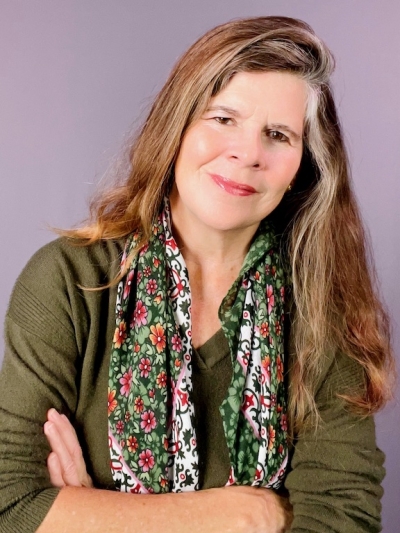
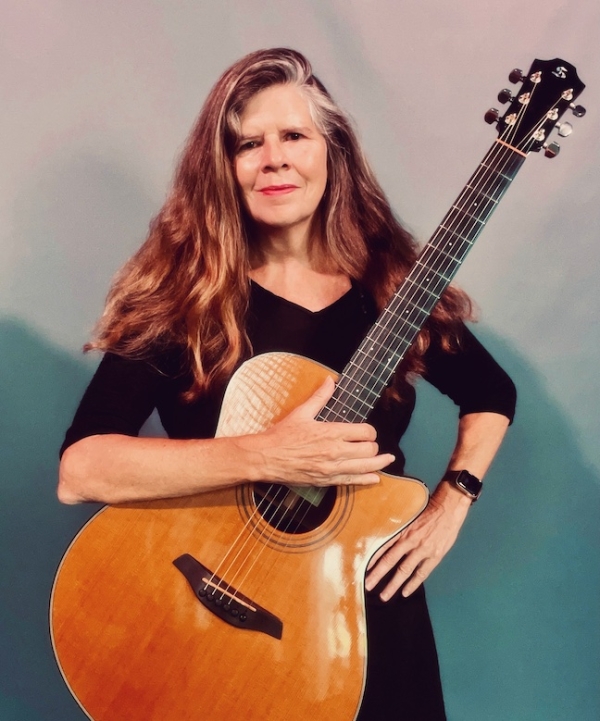
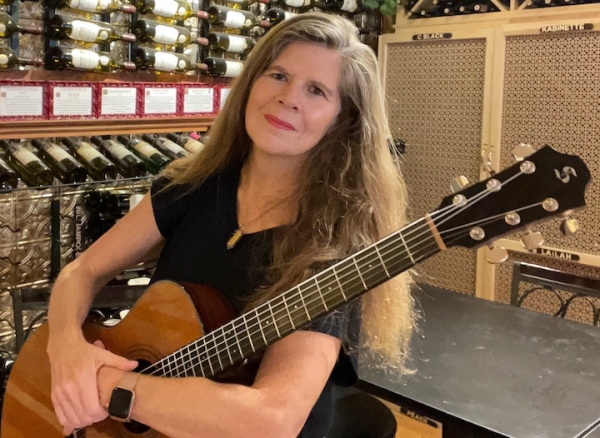
Michelle Qureshi is an award-winning, classically-trained guitarist, multi-instrumentalist and composer who has been releasing albums, singles and EPs since 2012 and has tens of millions of streams on global platforms. I have reviewed quite a few of Michelle's albums and singles over the past five years and have been very impressed with all of them. We did this interview via email and I think you'll enjoy getting to know more about Michelle as much as I have!
KP: Hi Michelle! How are you?
MQ: Hello Kathy, I'm doing great thanks!
KP: Are you in one of the areas of the US with hurricanes and/or super-hot weather right now?
MQ: We live in Central Indiana and we have just experienced an intensely hot week!
KP: We're cool and very windy here on the central Oregon Coast! It seems to be strange weather everywhere!
You recently signed with the Wayfarer Music Group label after releasing music on the Myndstream and Music As Metaphor labels for many years. What attracted you to Wayfarer Music Group?
MQ: Wayfarer is more of a collective of artists than a traditional label and it is very artist friendly. I think that's in part because both the president, Sean O'Brien Smith, and vice-president, Dieter Spears, are artists as well. Ideally, I think you want to trust your music with people who have both the skill set for the music business and an artistic sensibility. On a side note, Music as Metaphor is my own label and I do continue to release music under that as I have been doing since 2012!
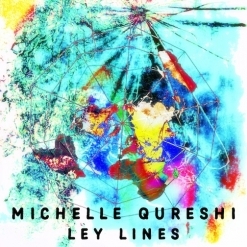
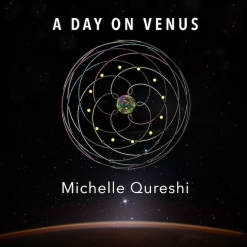
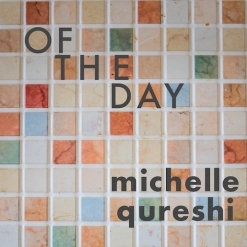
Click on album covers (except "One Is All")
to go to Kathy's reviews.
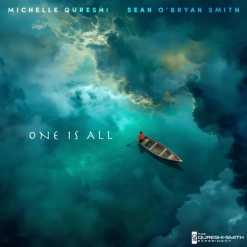
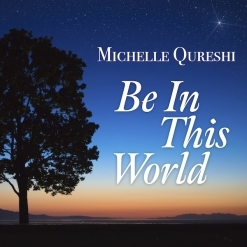
KP: I reviewed your first album on Wayfarer, Be In This World, earlier this year and loved it. Just a few days ago, One Is All with Sean O'Bryan Smith was released. I'm listening to that one as I'm typing the interview questions. I really like this album, too! Tell us about it.
MQ: Well, this was a unique project that involved me composing these nine tracks and then sending them to Sean who then added some of his amazing bass playing as well as other incredible enhancements in the production realm. He also successfully extended the duration of several of the tracks. As is my habit, I tend to drop into an idea and express it very concisely which sometimes leaves listeners and programers wishing a piece was longer. So, this collaboration delivers on that wish!
KP: Tell us about the inspiration or meaning behind "Birds Aren't Real." It's such an intriguing title - especially since there are a lot of bird calls in the music!
MQ: "Birds Aren't Real” is just a completely fun and engaging track! One thing I love when I travel is to hear the music of birds in different parts of the world. I'll even record them on trips as voice memos on my phone. Anyway, in the spirit of playfulness I sent this piece to Sean with this title and said I am open to changing the title to which he replied something like "absolutely not!" I'm so happy we kept it. It's a nod to some of our culturally crazy pandemic times to claims that have included that birds aren't real!
KP: Did you compose some of the pieces and Sean O'Bryan Smith composed others or did you collaborate on the compositions? The album presents a very interesting mix of styles, as do many of your solo albums.
MQ: Sean took my compositions and then added a variety of production elements to them as well as enhancing them with his phenomenal bass playing. So, yes, I wrote the music in a mix of styles with a variety of instrumentation, like my acoustic and electric guitars, a stringed Turkish instrument that is a bit like a small banjo and is called a cumbus, as well as the flutes you are used to hearing on my tracks and finally a variety of synth sounds. He spent a lot of time in the production of this album and then our label mate, Billy Denk, added the shine and polish in the mastering stage.
KP: In my review of Be In This World, I copied a quotation from your website that said: "Imagining myself as a wayfarer, world traveler, even a musical nomad, the album title and music is inspired by this quote: 'Be in this world as if you were a stranger.' Sahih al-Bukhari" Tell us a bit more about the quote as well as the album.
MQ: With this being my debut solo album for the Wayfarer label, I wanted to first consider what a wayfarer in this world might experience. So I took the concept of a musical nomad, traveling in this world, discovering new sounds and remaining curious. It also relates to my own occasional feeling of being a stranger in this world. So thank you for asking that question because as I answered it I realize how that same sense of worldly curiosity shaped
One is All, the collaboration album with Sean! Those song titles, with the exception of "Winds of Kashmir" reference places I have been.
KP: Have you done many collaborative albums with other artists?
MQ: I guess this is my first collaboration album, but I have done many collaborations on singles as well as features with many artists.
KP: How many albums, EPs and singles have you released in total?
MQ: Since 2012 I have released 18 albums and 44+ singles and EPs. Now, if only the glitch in updating my Spotify “About” page would be resolved, because it is frozen at 15, that could be known by my fans. Further, if Apple Music, which relies on All Music for bios, hadn’t stopped updating my career beyond 2017, maybe this question wouldn't be so hard for others to see precisely how many albums I've released!
KP: I'm glad I asked the question!
You are also well-known for your Harmonic Sound Immersion™ events. Tell us about those.
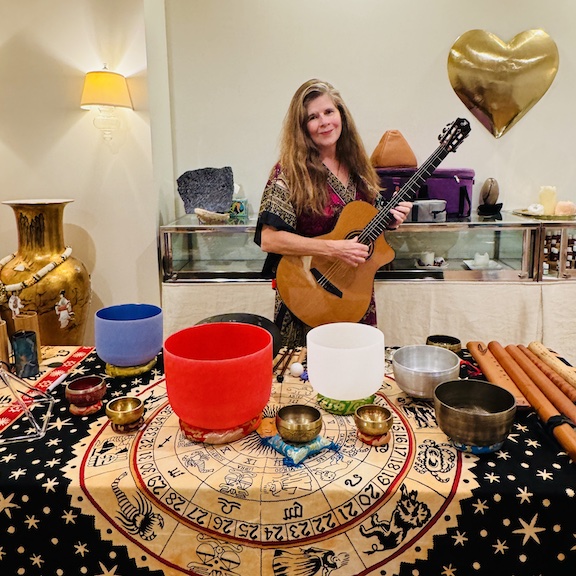
MQ: My Harmonic Sound Immersion™ is a transformative sound meditation created through the healing vibrations of ancient and modern instruments. I created it with a desire to merge my craft as a classically trained musician and recording artist utilizing an intuitive approach to performing, with a specific meditative and restorative experience in mind. I often say that this experience resembles a horizontal concert meaning that I create a unique hour of improvised, restorative music while participants enter a meditative state, often experiencing deep relaxation, dreaming, and restfulness.
Click on album covers to go
to Kathy's reviews.
KP: Do you present those events very often? All over the country? Outside the US, too?
MQ: My Harmonic Sound Immersion™ is well-known locally, where it is obviously easiest to present them due to all the instruments I tote back-and-forth for these events. I've shared it at yoga studios, retreats, meditation centers, schools, churches, outdoors and indoors, etc.! Last month I created a kind of hybrid offering when I was invited to play at a venue in a neighboring state that largely hosts guitar concerts. I proposed that I would first do a set performing my original guitar works and a second set of a mini sound immersion. The success of this show made me realize that this is something I'd like to continue to offer around the country, and I'm also considering a September sound immersion out in Arizona and my first international sound immersion is booked for this November in the blue zone region of Costa Rica for a yoga retreat. Another goal with these experiences is to offer these online from my home to a global audience. However, this will not happen until I can be certain that I can deliver pristine audio to attendees. That has been the main obstacle to doing this because, if you remember right when the pandemic started, you could not open a social media platform without seeing and hearing some of the glitches with people streaming music live or the steady delivery of just so many postings of music videos with really compromising audio! So I'm still shaking off some of those memories lol.
KP: I do remember that!
Okay, let's backtrack a bit now and get to know more about you. Where were you born and where did you grow up?
MQ: I grew up in Northwest Indiana and until I went to college, we shifted around that area to 5 different homes and towns. One of the most impressionable but with the shortest time span was when we lived three blocks in from the shores of Lake Michigan. I bought my first guitar when we moved there; I was 13 years old. At the top of the street was an entrance into an unbelievably beautiful world of diverse landscapes including wetlands, prairies, oak savannas, rivers, forests, and the iconic sand dunes. That was such a formative part of my teen years and my first opportunity to express myself musically. Today those residences are gone and that land is part of the Indiana Dunes National Park!
KP: Wow! I had no idea Indiana had sand dunes!
Are any other family members musicians?
MQ: No, but both of my parents loved music and my dad had a Hammond B3 organ; he could play by ear!
KP: How old were you when you developed a passion for music?
MQ: There were signs even when I was a little kid, gravitating toward the toy guitars at the toy stores, and I remember I loved watching cartoons of The Beatles where guitars were prominent! In elementary school, I had a friend who would always have a guitar propped up in the corner of the living room, which caught my eye every time with a kind of mysterious, silent beauty. Finally, when we moved to the house at the dunes, I bought my first guitar, and that really shaped my teenage years and my passion for music.
KP: Did you play in any rock bands?
MQ: I have vague memories of playing in various bands; cover bands, college bands, an all-women band, jazz ensembles, duets and solo gigs, mostly short-lived with backstories that are good for a laugh now!
KP: Were you a music major in college?
MQ: I started out as a psychology major at a big university, and while I loved and still love that subject, three semesters in I knew my happiness was tied to my passion for music. Not only that, I knew that all the skills and information I had gathered on my own as a self-taught guitarist would have to be radically reshaped by starting out as a classical guitar student. So I shifted to a small music conservatory, learned a whole new technique, formalized my understanding of music theory, history, and all the things that are necessary for Bachelor and Master of Music degrees in classical guitar performance.
KP: Interesting! How many instruments do you play?
MQ: The quick answer is however many instruments you hear on my albums. The fuller answer is more about my approach and that is that I'm willing to try to play anything I can get my hands on. If I can produce a sound, I may use it for a project or for my sound immersion but having gone through the rigorous training to master an instrument at a conservatory, I would never claim to be masterful on many of the instruments I play. Nonetheless, I do allow myself to explore and discover. For instance, on my album
Seventh Wave, I bought an inexpensive student cello and recorded a cello part, and on my
Meditations album, I also added flutes and didgeridoo. Will I ever master circular breathing? Maybe not, but I can still create an exciting sound on didgeridoo! When I taught general music in schools, I taught instruments to kids according to how the sound is produced so that we could categorize how each instrument is played. Chordophones, Aerophones, Idiophones, Membranophones and Electrophones allowed us to understand how any instrument produces sound. I always thought that was a straightforward approach that put the perspective of all instruments around the world into categories that made them accessible.
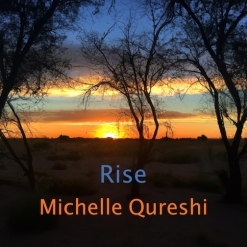
Click on album covers
to go to Kathy's reviews.
KP: What an interesting learning experience for your students!
When did you start composing music?
MQ: I started committing to that around 2012, which coincided with my daughter beginning third grade at our public school and with the opportunity for me to start building a modest home studio. It was quite minimal, and my studio would grow over the years, but the important part is that my inspiration to create music is ever present and ever expanding, for which I am so grateful!
KP: So are all of your fans!!!
It has seemed like a lot of women who are composers and soloists have had a harder time being taken seriously than most men do. Was that your experience getting started in the music industry?
MQ: The guitar is an incredibly male-centric instrument and yes it can be different being a woman who plays guitar. In the streaming world, guitar playlists so often are dominated by male players. In fact, early on, a much-streamed guitarist posted his Spotify guitar playlist online and I simply added a comment like “let's get some XX chromosomes on this list.” With that I got several spots on his playlist and got to know a lot of guitar players, still mostly male. In fact, my guitar collaborations include tracks with that American guitarist as well as guitarists from Canada, Switzerland, Norway, Sweden, and the UK. Hopefully that list will not only expand geographically but will come to include some female guitarists.
KP: I hope so, too!
MQ: As for the industry, I remember the first time I went to NAMM. Wow, did I feel invisible as a middle-aged woman walking around this big music industry show! Interestingly, the people I felt most dismissed by were vendors who were middle-aged women! That really disappointed me. Last year, my voice was included in the book
Candid: Conversations on Women in the Music Industry by UK author Sammy Stein. it's a book that relates the experiences of women from many genres and with different roles in the music industry.
KP: I have that book on my must-read list!
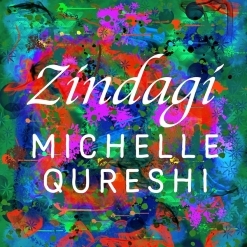
MQ: At a somewhat recent gig, I created a few hours of improvised guitar music and was feeling completely unseen. Finally, I had a fascinating encounter when I felt a pair of eyes lock into mine from about 12 feet away. A twenty-something, nonverbal autistic man stared intensely at me and then proceeded to take big steps backwards and sideways. Soon, he and his mother approached me and explained that he was just experiencing the energy of me and my music and that he was feeling so much love. That was an incredible exchange! I came home and wrote the opening track for my album Zindagi, called “Being Seen.”
KP: What a fascinating story!
In 2024, you released Lineage, a very personal album that reflected on your relationships with your mother and your daughter. Tell us a bit about that one.
MQ: I lost my mother when I was in my early 30s and I did not have my only daughter until a decade later, so it was very important to me to tell stories and share many memories of my mom with my daughter, to foster that spiritual connection that would allow my daughter to feel the love and presence of her grandmother. Of course, as I raised my daughter, I wondered what it would have been like to have had my own mother at my side, but I never dwelled on that "what if" and instead sought to nourish my daughter, love her unconditionally, and guide her to feel just how much she is loved! Now I have, in this 23-year-old woman, an amazing, loving relationship. As for my mother, even this many years later, there is still healing taking place for that loss and this album was part of that process.
Lineage references the triple goddess energy of Mother-Maiden-Crone and I adopted these roles according to my life, with me as mother, my mother as crone, and my daughter as maiden. The album approaches both of these relationships on a timeline unique to each experience, from the caretaking days toward the end of my mom’s life to the early days of loving life with my baby daughter. The titles reflect the daily and nightly tasks in a sequence poignant to both roles: "Days So Long," "Love What You Have," "This Shade of Love," "Unbroken Love," "So We Walked," "Time to Let Go," "Night Arrives," "Rest Now."
Click on album covers
to go to Kathy's reviews.
KP: The is such a compelling back-story! Thanks for sharing it!
I really enjoyed reviewing Zindagi, too, which was also released in 2024. Tell us a bit about that album.
MQ: My Zindagi project explored the vibrancy and colors of life through ten deftly composed pieces that range from joyful, light-hearted works to introspective, meditative ones. Once again, I recorded this in my home studio on instruments including guitars, (acoustic, electric, and bowed), bells, singing bowls, chimes, keyboards, harmonica, synths, synth drums, and even a theremini. It really celebrates “life” which is the meaning of this Persian/South Asian word. Creating these sounds brought me a lot of joy and I played with rhythm and the spirit of dance much more on some of these tracks than in the past.
KP: It seems like there are many things and factors that inspire your music. What are some of the others?
MQ: I feel that oftentimes people who talk about inspiration reach outside themselves and while I do feel very inspired by the natural world, like when I am experiencing seashores, forests, sunsets, thunderstorms, etc., I really feel connected. Similarly, my love of family and friends offers much inspiration from feelings and emotions I experience in our relationships. I also find that sounds alone inspire other sounds, and I feel like when I'm improvising or even composing, that I hear what comes next that split second before I get there! I love creativity, exploration, and discovery, and allow for these things to loop through my life.
KP: Interesting! What kinds of things do you enjoy doing when you're not doing music?
MQ: I love spending time with family and friends doing things like hiking, traveling, playing sports, hearing concerts and watching movies. When I’m alone, I like to focus on the more meditative side of things like yoga, meditation, and growing my spiritual awareness.
KP: What has been your most exciting musical moment so far?
MQ: I’d like to believe it is yet to come!
KP: Fair enough! Who are some of your favorite composers?
MQ: As I mentioned, I came to the world of classical music late, but the connection is profound to composers like Bach, Mozart, Beethoven, Mahler, and on up to Copland, and Philip Glass to film composers like Ennio Morricone, Maurice Jarre, and Joe Hisaishi, among others.
KP: Who and/or what are some of the major influences on your music?
MQ: A lot of the artists mentioned above, as well as the rock and pop music I grew up around, influenced me. When I started music school and met so many international music students here in this country studying Western Classical Music, I sought to learn about the indigenous and folk music of their homelands. Listening to music played on Pipa, Shakuhachi flute, santoor, ney, dumbak, tabla; it was all fascinating. And if I didn’t hear the instruments live, I could get CDs of gamelan orchestras or of Bulgarian Women’s Choir or Carnatic violin. I feel I absorbed all these influences, and that allows my own imagination to feel borderless.
KP: Your musical voice is unique, and this explains beautifully why that is!
If you could have any three wishes, what would they be?
MQ: One wish is that music not be treated like a competition. Another wish is that the music industry and the music business be kinder and fairer to artists. Lastly, I wish that we could learn more completely about the incredible healing power of music and apply that knowledge to help us evolve as a species.
KP: Amen to all three! Is there anything else you'd like to chat about?
MQ: Well, first I’d like to thank you for offering me this interview. I know I’m fortunate to be able to practice my passion, but I also know my unique blend of intellect and intuition have brought me to this place to do what I love and to share it so that others may resonate with that energy of love embedded in the space of music!
Many thanks to Michelle Qureshi for taking the time to chat and tell us about her music! To learn more about Michelle and her music, but sure to visit
her website and her
Artist Page here on MainlyPiano.com.
Kathy Parsons
July 2025