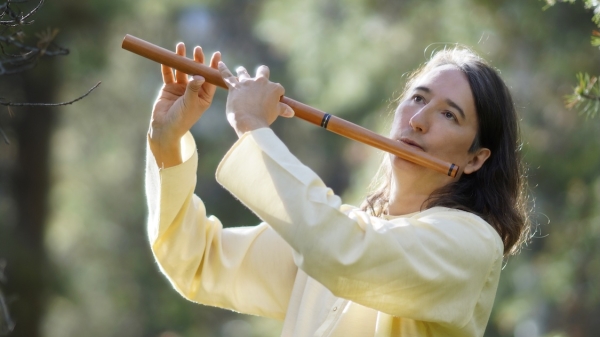
I have been aware of Ron Korb’s music for some time, but it’s been mostly his collaborations with other artists. Earlier this year, Ron asked me to review
Global Canvas, and it blew me away! I started exploring some of Ron’s earlier albums, and found them to be equally intriguing, so I decided to approach Ron about doing an interview. We did this interview via email in September 2025. Enjoy!
KP: Hi Ron! How are you today?
RK: Wonderful!
KP: Good to know! You released your 30th album, Global Canvas, earlier this year, and what an amazing, eclectic album it is! Tell us about it.
RK: Global Canvas brings together my love of acoustic music and cultural storytelling. Everything on the album is recorded with living musicians and no AI was used in any way. I still sketch my first ideas with pencil and manuscript paper, and the core rhythm section laid down their tracks together in the studio, which gives the album a really human, connected feel.
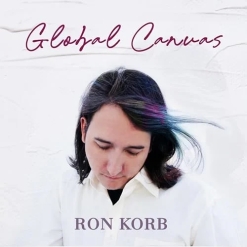
Click on album cover
to go to Kathy's review.
Musically, it’s eclectic. Some of my usual influences like Japanese, Chinese jazz and Afro-Cuban traditions were used, but also there were challenges to explore new directions by incorporating elements from Brazilian Bossa Nova and Parade Samba, Cambodian, and Korean music. That process of discovery and blending new ideas really opened up some fresh colours and textures in my music.
KP: Interesting! Before Global Canvas, I had reviewed quite a few albums that you played on, but this was the first where you were the primary artist. I’m hooked and have checked out some of your other albums as well. Let’s focus on this new one for a few minutes, though.
I know it’s kind of a standing joke to ask guitarists how many guitars they own, but let’s turn the tables for a moment and ask how many flutes you own and how many different countries they come from.
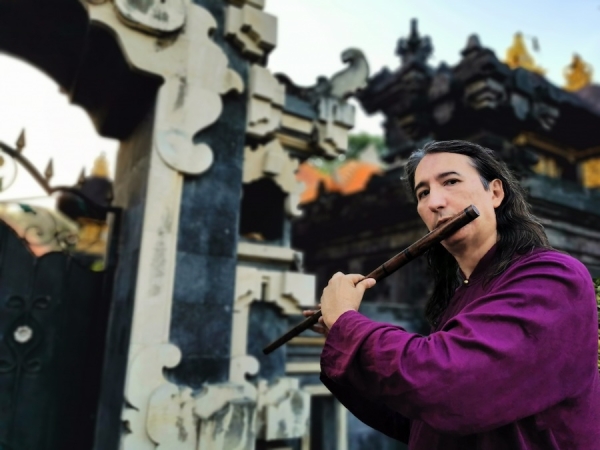
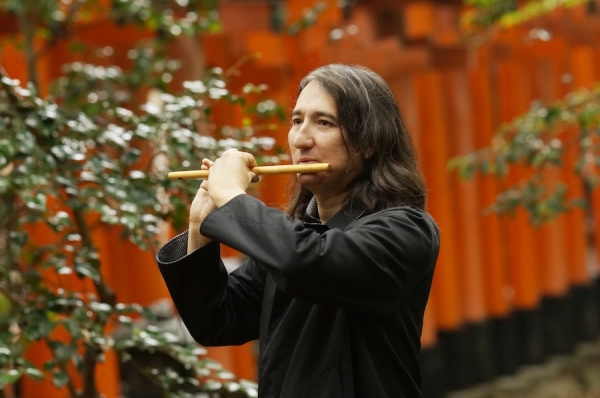
RK: My standard answer is 250 flutes although I haven’t counted them lately. Just off the top of my head I would say they come from about 30 countries. Just in China alone, there’s an incredible variety like the dizi, xiao, suona, hulusi, bawu, and sheng, to name a few. A proper dizi set is usually seven flutes, and I like to collect
pieces from different makers to capture the subtle differences in tone.
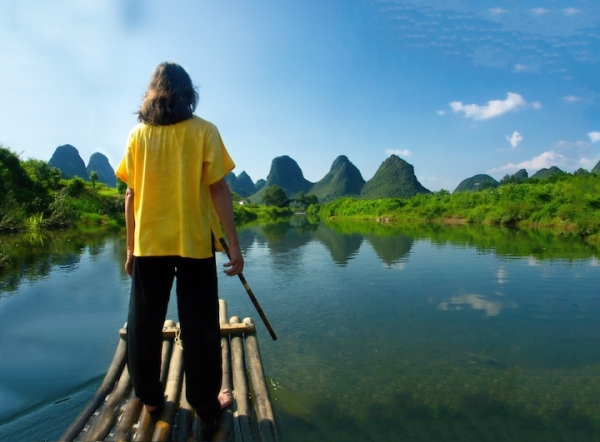
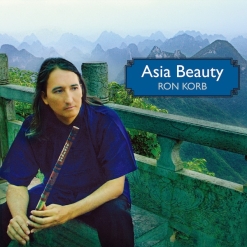
Yangshuo, China
Kyoto, Japan
KP: That’s a lot to keep track of!
In addition to many of your flutes, there is a long list of international guest artists on Global Canvas. Are they mostly artists you have worked with before? How did you choose them?
RK: Working with musicians is one of the most exciting parts of the process. Especially the first rehearsal when you hear a song that just was an idea in your head come alive. Many of the players on this album are longtime collaborators, which adds a wonderful sense of trust. One thing I will say as a producer is, always match a player’s talents with the right task in the right song to get strong result. Sometimes I even write a piece specifically with a certain player in mind, to highlight a unique aspect of their artistry.
KP: Important advice! Tell us a bit about the story that inspired the Global Canvas album.
RK: There are really two main concepts behind the album. The first is the idea of beginning with nothing, whether it’s an album, a novel, film or a painting - you always start from a blank canvas. That’s why I called it Global Canvas: it’s about creating something new from drawing inspiration from cultures around the world.
The second concept comes from the mythical origins of the ancient Korean bamboo flute, the Manpasikjeok, known as ‘the flute that can calm 10,000 waves.’ I was fascinated by the idea of music as something with the power to heal, transform, and bring harmony, and that became a guiding spirit for the album as well.
KP: Quoting myself in my review of the album: “I can't say enough about how impressed I am with
Global Canvas! Fascinating, inspiring, incredibly beautiful and even, at times, full of fun, this is one fantastic album! In times when it feels like the world is falling apart and being divided into warring factions, this music strongly suggests feelings of global unity and how much we can all share with each other, breaking down barriers while maintaining the traditions of our cultures. I know that's reading a lot into the music, but that's the way it makes me feel.” Was my interpretation at all accurate?
RK: Definitely glad it makes you feel that way. That’s a beautiful interpretation, and I’m truly honoured. I don’t set out to tell listeners exactly what to experience but rather it reflects my love of different cultures and traditions. If the result speaks to global unity and connection, then that means a lot, because that spirit really is at the heart of what inspired Global Canvas.
KP: You played “Angkor Wat” on a unique flute made especially for you. Tell us a bit about that.
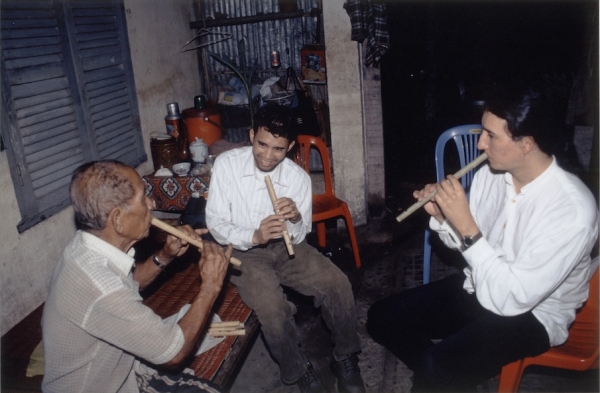
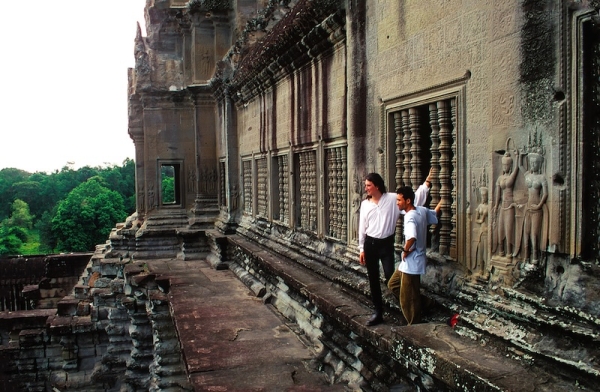
RK: Many years ago, when I was recording at Real World Studios in Bath, England, I had the chance to meet Peter Gabriel. He was intrigued by the different flutes I played, and during our conversation he suggested I connect with his friend, Cambodian human rights activist Arn Chorn-Pond. Arn later invited me to join a project in Cambodia where we sought out, assisted, and recorded master musicians who had survived the Killing Fields era. During that time, I was introduced to master flutist Yim Saing, who gave me the traditional Cambodian flute featured in the piece. We also visited Angkor Wat on that trip, and the song is my reflection of that moving cultural experience.
KP: Another piece on the album, “Isla Grande,” won Best Instrumental Composition at the USA Songwriting Competition last year. What an upbeat piece of musical sunshine that piece is. What inspired it?
RK: The title "Isla Grande" came from a small Island in Panama. The arrangement of the song has changed a few times over the years until finally arriving at the way it appears in Global Canvas. In fact, I even recorded it before but wasn’t happy with it. Hilario Duran and the Cuban rhythm section really brought it to life.
KP: Do you know what your next project will be?
RK: I am working on a few singles for release on streaming and will likely be doing a collaborative project next year.
KP: Do you play any non-flute instruments?
RK: I play a bit of piano and I can sing as well. The piano is mainly a tool for writing music. I actually have some vocal training but never was able to incorporate it in my own recorded music. I have even sung backup for Olivia Newton John and recently in a new song by Michael Sembello called “Tell The Story.”
KP: We’ll talk about some of your other albums in a minute, but let’s learn a bit
more about you. I know you were born in Japan. How old were you when you and your family left Japan?
RK: No, I wasn’t born in Japan but I am glad you think that.
KP: Oops!
At the Grammys
RK: My grandparents were from a province in Japan called Fukuoka. After graduating
university I lived in the Setagaya area of Tokyo and I have visited over 20 times since. My Japanese heritage is traced back 43 generations to Fujiwara no Kamatari, a prominent historical figure born in 614 AD.
KP: Interesting! Did you grow up in Canada?
RK: Yes. I was born and raised in the Toronto, Ontario area.
KP: When did you start playing flutes?
RK: Not particularly young. Many people over the years assume I started playing music when I was 3 or 5. I started playing recorder in grade school and then played clarinet in high school before transitioning to the flute. I always wanted to play the flute, though, since childhood. I just never had a chance before.
KP: When did you start composing music?
RK: Really, from the very beginning I started coming up with melodies and little pieces. In University I was writing songs with one of my theory professors who secretly was a pop songwriter.
KP: Are any of your family members musicians?
RK: Ha ha… no, none of my family members were professional musicians. However, I would say my father was very musical. If he had played an instrument, I’m sure he would have been incredible. He had an unbelievable ability to listen to music and really analyze every detail.
KP: How many albums, EPs and singles have you released in total?
RK: I like to say I have about 30 albums, which includes some compilation albums. If you count reissues, the number is even higher. I’ve also released 16 singles, and I have 387 credits on various albums. On top of that, I’m credited with performing on over 100 films and television shows, according to IMDb.
KP: Wow! That’s really impressive!
Who and what are some of the influences on your music?
RK: Gosh. Some musicians inspire me through their sheer playing ability, like Jean Pierre Rampal, James Galway, Tani Senzan, John Kaizan Neptune, and Robert Aitken. Others inspire me for their improvisational skills like Hubert Laws, Art Pepper, Coltrane, Charlie Parker, Keith Jarrett, and many more. When it comes to writing, I draw from a wide range of influences, from Bach and Beethoven to Miles Davis, Wally Badarou, and Stevie Wonder, the list is really endless.
In terms of building a career as a musician, Moe Koffman was a great role model. He not only made his own albums and played live with his band but also worked as a session musician for other artists, as well as in film and TV, demonstrating how to sustain a versatile and creative musical life.
KP: Wow! No wonder your music is so eclectic! Do you teach as well as compose and perform?
In Cambodia.
At Angkor Wat.
RK: Strangely enough, I don’t have a teaching studio. Of course, I taught flute during my student days, but it never really became a part of my career. I do teach the odd lesson - usually to another professional who wants to learn something specific.
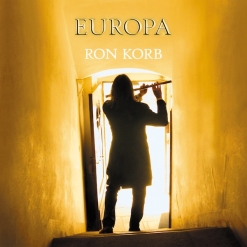
KP: I’m listening to your Europa album as I’m writing questions. That album came out in 2014 and is so different from Global Canvas. What was the inspiration for that album?
RK: I’m glad you mentioned Europa, because it’s an album that’s often overlooked. The CD comes with a beautiful booklet explaining the meaning behind each track. The music draws from both my classical training and my travels across Europe. For example, ‘St. Johann,’ ‘Mozart’s Wedding,’ and ‘Beethoven Pasqualatihaus’ pay homage to the great composers, while ‘Christmas in Prague’ has more of an Eastern European sound. ‘Lady of Sonnets’ is inspired by Shakespeare, ‘Beckett’s Whisper’ by Samuel Beckett, and ‘Italian Summer’ reflects my first trip to Italy, where I took masterclasses in Siena and Assisi.
KP: It was a little bit startling to go from Global Canvas to Europa, but both albums are incredible! Tell us about recording “Beethoven Pasqualatihaus” in Beethoven’s apartment.
RK: To be honest I didn’t write the piece in there, but we did shoot the video in Vienna and a part of which was in the actual Beethoven Pasqualatihaus. I would highly recommend to any of the Mainly Piano readers to visit this apartment if you get the chance. It is where “Für Elise” and the Fifth Symphony were written.
KP: That has to be really inspiring! Do you have a lot of classical training?
RK: A fair bit. I studied at the Royal Conservatory of Music and hold a degree in Music Performance from the Faculty of Music University of Toronto. I also took various master classes in North America and Europe during my student days.
KP: Japanese Mysteries came out in 1993. Was that your first album?
RK: No, but it was my second major album. I was already living in Tokyo and studying traditional Japanese Gagaku music at that point and it was an amazing experience putting that album together with my good friend, Hiroki Sakaguchi. We recorded part of the album in Tokyo and part of it in Osaka. I remember the last night before I took the plane back to Canada, our whole team was so tired I was literally sleeping on the studio floor. We were still recording some last-minute classical guitar parts and the mixer was yelling “I have to mix!!!”
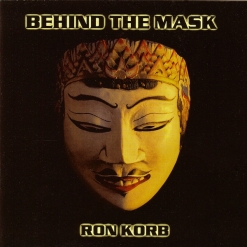
KP: [laughs] Behind the Mask (1995) is another really eclectic album! Tell us about that one.
RK: Behind the Mask was the first truly eclectic album I created. After the success of
Japanese Mysteries, I was at risk for being known for just one style.
Behind the Mask allowed me to explore other genres, including Latin and crossover Celtic, with pieces like ‘Fields of Home.’ Tracks such as ‘Shadow Dance,’ ‘Dark Eyes,’ ‘Journey Home,’ and ‘Shadow Puppets’ also translated well to live performance, which helped open up new opportunities for concerts and touring.
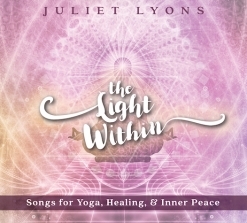
Some of Ron's collaborative
albums. Click on covers to go to
Kathy's reviews.
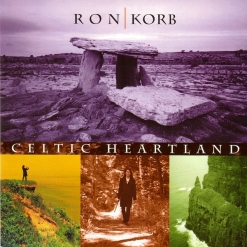
KP: Another big cultural shift was with your 2000 album, Celtic Heartland. Tell us about that album and what inspired it.
RK: By the time I started writing the music for Celtic Heartland, I was already playing a lot of Irish whistle on TV shows like Road to Avonlea and Emily of New Moon while taking lessons from my friend Loretto, a traditional Irish flutist from County Sligo. It was also fortunate that some of my friends and colleagues from Loreena McKennitt’s band were available to play on the album. Many of the tracks, like ‘Cuchulainn,’ ‘Green Eyed Maiden,’ ‘Noble Land,’ ‘Night of the Long Shadows,’ and ‘Oracle,’ went on to become mainstays in my live concerts.
KP: Do you have any favorites of your albums and/or singles? (I know, artists have told me that it’s like asking if you have a favorite child!)
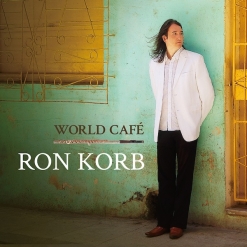
RK: As far as favourite children I would say I like Havana Sun, Desire, Bass Flute
Bossa, Cordoba, The Sword of Heaven, My French Movie, Castle Moon, and Todaiji.
KP: Are you still doing a lot of traveling and performing?
RK: Since COVID, I haven’t done as much live performing as before. This year, I traveled to Dubai and India, and I’ve been focused on completing an Arts Grant project here at home. Next year, I hope to have more free time to travel.
KP: Are there places you haven’t visited yet that you really want to see?
RK: Yes, we would like to go to Iceland, Portugal, explore more countries in South America and Africa.
KP: What kinds of things do you like to do when you aren’t composing or performing?
RK: My wife and I like to travel for fun and also spend time in nature. I also like films and, of course, listening to music and going to concerts.
KP: If you could have any three wishes, what would they be?
RK: My greatest wish is for World Peace.
I’d also wish health and happiness for everyone because a happier and healthier world would be a nicer place to live.
I hope everyone can find their own sacred music. A piece, album or band that, no matter how tough life gets, can bring them comfort and solace.
KP: Very nice! Is there anything else you’d like to talk about?
RK: I’d like to sincerely thank you for interviewing me today and giving me the chance to reminisce about my decades-long career. It’s nice to reflect on what inspired certain songs and albums over the years. I’m deeply grateful to everyone who has taken the time to listen to my music—whether streaming, attending concerts, or watching on YouTube. I am also very grateful to all the friends, family, musicians, teachers and colleagues that have helped me find my way. My hope is that my music can touch their lives in the some way, the same way music in general has enriched mine.
KP: Thanks so much, Ron! I really appreciate your taking the time to do this interview!
For more information about Ron Korb, be sure to visit
his website and his
Artist Page here on MainlyPiano.com!
Kathy Parsons
September 2025