Samer Fanek (rhymes with Grammar Panic) very recently released his fifth album,
Forever Elsewhere, so this seemed like a great time to do a new interview - especially since we did the last one in early 2017! I had reviewed Samer’s first album,
Wishful Thinking, in 2016 and we met at the 2017 Whisperings Solo Piano Radio Awards Concerts in Southern CA. He did a house concert here in Florence, OR in May 2017. I’ve reviewed all of Samer’s albums as well as some of his singles, and have thoroughly enjoyed them all. It’s been fun to catch up with him, so I hope you enjoy the interview!
KP: Hi Samer! I can’t believe it’s been more than eight years since we did our last interview! How have you been?
SF: Hey Kathy! Wow I can’t believe it either, I’m beginning to feel time accelerating over the years and it’s a bit scary.
I’ve been doing really well, and have been enjoying how a new album release always brings with it all sorts of exciting things and events. Hopefully things are going great for you too!
KP: I’m doing fine here, too!
You recently released your fifth album (plus some singles) called Forever Elsewhere. Before we get into the music itself, tell us about the title.
SF: I’ve had lots of moments where a resolution or an answer felt forever out of reach, and I noticed that I was quickly coming up with more and more songs during those moments. For example, moments of feeling stuck with a lack of progress in life, or watching a dream collapse and having to rebuild it almost from scratch, or going through periods of illness.
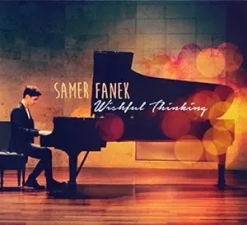
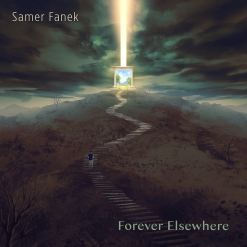
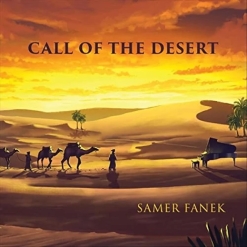
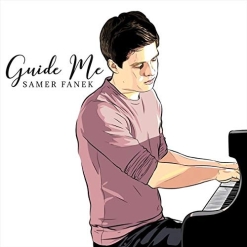
Click on the album covers
to go to Kathy's reviews.
I believe everyone has these sorts of ups and downs where it momentarily feels like things will never, ever get better. Those experiences inspired a collection of personal compositions, and the name “Forever Elsewhere” seemed to poetically capture a common thread best as well as the title track.
KP: The cover artwork is also very striking and mysterious. Tell us about that, too.
SF: I love this album’s artwork! The illustration was hand-drawn by a very talented artist, Hassane Oussellou. By the way, he drew my Call of the Desert album artwork too! I asked him to capture a bleak desolate landscape which represents the lack of clarity or answers, with stairs leading to an opening to a more beautiful world, representing a hope for a light at the end of the tunnel - the “Elsewhere” part of the title, if you will. He shared some initial sketches and immediately captured the essence of what I was looking for. I was amazed by everything about the illustration, from the way the concept was translated to a drawing, to his drawing style and use of colors.
KP: It’s a fascinating cover! You have mentioned that the album is especially personal and you considered not releasing it - and that would have been a terrible loss! Can you tell us a bit about the background for the album and what drove you to create it?
SF: I think it eventually needed to come out. I have lots of compositions sitting in unfinished states, and I’ve been noticing a growing number of them dealing with more difficult themes around feelings of frustration, loss, longing, restlessness and so on. My hesitation about releasing them was that I thought people have enough of that in their lives and wouldn’t want music of that sort to add to it. But after some soul searching I came to the conclusion that we all seek out songs that reflect our current mood, and these songs in turn offer understanding and some kind of catharsis. I’m really hoping that’s the case for my listeners as it was for me when I created these songs.
KP: I have no doubt that many people will relate to the music and will appreciate the common ground it provides.
As has been true of your earlier albums, Forever Elsewhere doesn’t really fit into any specific category or genre. Is it freeing to not have to follow specific rules or expectations in order to create your own music while staying true to your own artistic vision?
SF: I do find it freeing, though in a way, I feel like I have no other choice since I’ve learned how to create music entirely by ear through trial and error, developing a particular sound along the way. There’s something nice about doing what feels right without worrying if it breaks certain conventions, and being unfamiliar with them is an easy way to make that possible.
KP: Ha ha! Good point!
SF: This approach gave me the freedom to try combinations that perhaps aren’t conventional in piano-driven instrumental music, such as pairing the piano with powerful drums and distorted electric guitars to achieve a more intense feeling. The huge library of virtual instruments I’ve collected over the years can also be very freeing since it provides a wide palette to choose from, though at times it feels like a paradox of choice, and my poor hard drive probably hates it.
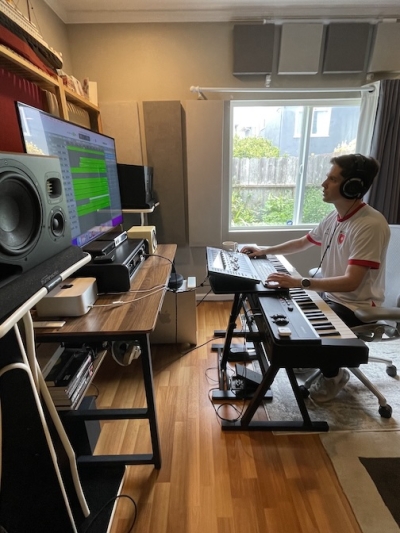
Samer in his home studio.
KP: Like your other albums, you recorded this one in your home studio in Daly City, CA (just south of San Francisco). The sound quality is amazing. How did you fit the full orchestra into your bedroom? Actually, I’m kidding there, but how do you get such a great sound?
SF: Thank you Kathy! My home studio has come such a long way over the years. The most recent upgrade was ripping out all the walls and adding about 10 inches of sound absorbing materials, a 300 pound door, bass traps and acoustic panels. It was a whole ordeal, but I felt it was absolutely necessary to make sure I’m able to create music at very odd hours of the night without the sound leaking outside.
Since I can’t afford working with an orchestra, I record each instrument part one by one through the keyboard - everything from orchestral parts like violins, cellos, and French horns, to guitar solos, trumpet solos, and the drum parts. At first, some parts might sound a bit unrealistic, and they’re further shaped with nuances that I hear in real players playing these instruments, such as gradually changing a note’s volume, pitch bending or modulating certain parts. It’s very time intensive but it makes the whole performance come alive.
I also work with an amazing mixing and mastering engineer, Miklos Malek, who I discovered through his work with Yanni. We’ve been collaborating for years now, and he has a great sense of how to give the sound the kind of balance, creative nuance and sonic clarity that brings the best out of each instrument and makes the whole track shine.
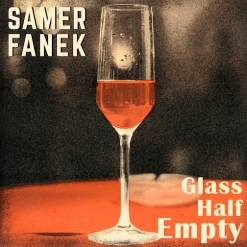
KP: I reviewed “Glass Half Empty” when you released it as a single earlier this year. It has an interesting dichotomy in that parts of it feel very playful while others are much more dramatic, even melancholic. Was that your intention?
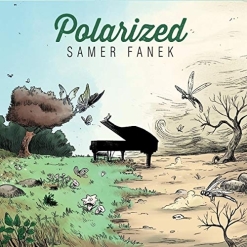
Click on the album covers
to go to Kathy's reviews.
SF: Thank you for that wonderful review! Yes, I thought it would be fun to include a song early on that makes fun of my occasional pessimistic side. While I can sometimes be a little cynical and sarcastic, rather than delve into that side, this composition came about during those “why am not surprised!” moments after repeatedly having my musical momentum interrupted by one unfortunate event or another. By the way, on this one particular day I created this
short clip to capture what goes through my head with this song. Your readers might enjoy it!
KP: It's a cute clip! “Toward the Unknown” is very dark and mysterious. What inspired that one?
SF: I think it came from reflecting on moments when I was taking big risks or making major changes without much planning. I can be impulsive that way, and I trust my gut a lot more often than my brain, even when the outcome looks very uncertain. The mix of mystery, fear and excitement that comes from that is something I know too well, and I’m hoping the song captures that mystery as well as a quiet sort of confidence.
KP: I really think it does! “Restless” has a powerful energy with the drums and electric guitar providing a driving beat and a sense of urgency. The drums and electric guitar really sound live, but are they actually digital?
SF: They are virtual instruments that I perform on the keyboard! By the way, I actually find it
really fun to play the drums on the keyboard, with one finger controlling the snare, another the kick, a few for the hi-hats, and so on, though it does look a bit ridiculous. To be honest I sometimes feel like in another life I might’ve been a drummer!
The same goes for the electric guitar solo. It is a virtual guitar instrument run through a virtual amp that I perform on the keyboard with pitch bending, modulation, and an expression pedal to make it feel like a real guitarist is playing. I have recorded this
short clip of how I did this for “Fleeting Struggle” if your readers are curious.
KP: Thanks for sending those clips over! I added the three links within the interview.
“Endlessly Lost” is also a real powerhouse, both emotionally and instrumentally. I think it was the first single from the album four years ago. Tell us about that one.
SF: If I remember correctly, I composed it partly during the pandemic and finished it some time later after I got very ill, both very uncertain times. It was another case where frustration pushed me to create a song, and the result ended up feeling like it naturally belonged and connected perfectly with the overall “Forever Elsewhere” album story, even though it was composed four years earlier.
KP: Interesting! “Inner Collapse” is the only piano solo on the album. What inspired it?
SF: I imagined it as a kind of soundtrack for an emotional burden or some inner pressure that builds up quietly over time until it causes a breakdown of sorts. It was also the only track where I felt adding more instrumental arrangements beyond the piano would take away from the composition, rather than enhancing it. I initially had synth pads and some strings in the background, but decided to mute them all and let the piano tell the story by itself.
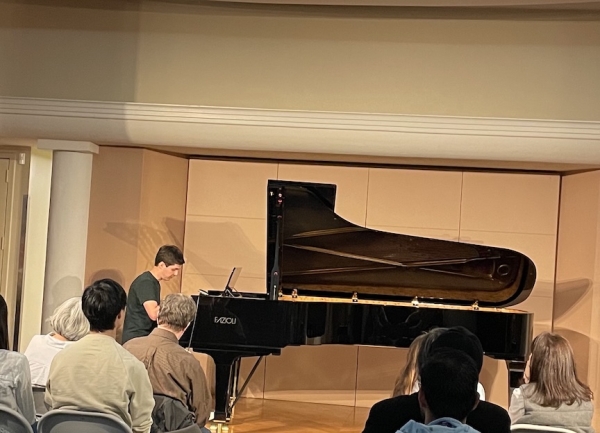
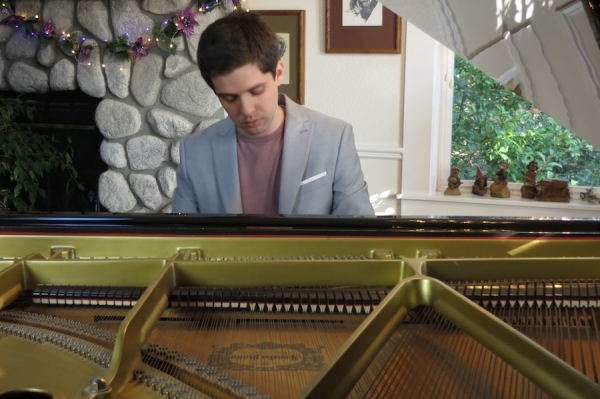
Concert at Piedmont Piano Store in Oakland, CA.
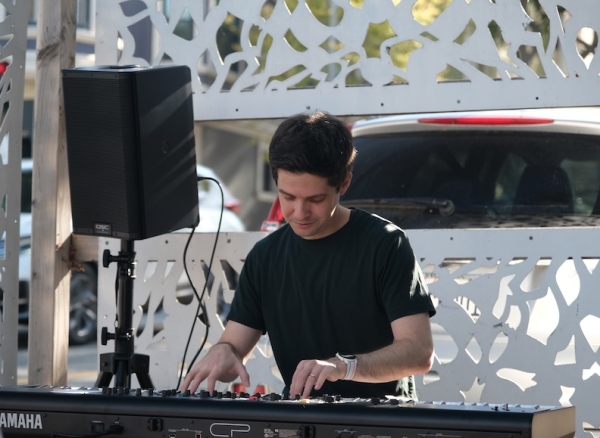
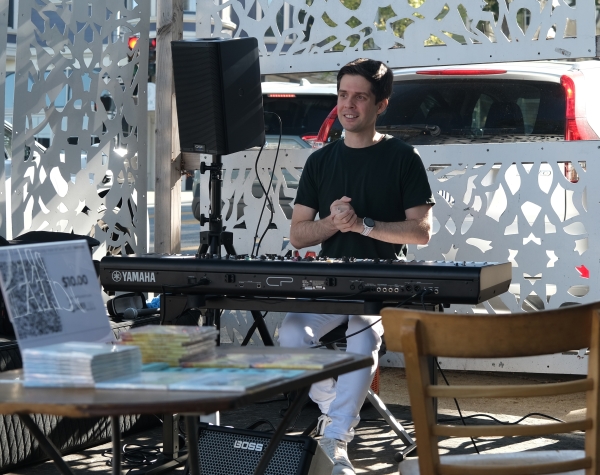
Playing at an outdoor cafe in San Francisco.
KP: Great job!
“Scar Away” has a very restless intensity and powerful energy. This one reminds me quite a bit of Yanni’s high-energy music. What’s it about?
SF: I have a funny story behind its name. It was originally called “Soar Away,” but the font made it look like “Scar Away” from a distance. The latter was accidentally more fitting and had a bit more bite that matched the energy of the song, plus it would sound really cool on a T-shirt! As I kept working on it and playing it over and over, I noticed that I was having an indescribable feeling of catharsis, though I sometimes wonder if my hands need a vacation after too many takes!
KP: The closing track, “One Last Try,” feels very much on the verge of giving up. I really hope it was never that bad for you, but it’s such a beautiful and heartfelt piece.
SF: It came from a brief moment when I felt that nothing was working the way I wanted it to. I sat down at the piano and recorded a theme of what I think "one last hurrah" might sound like. After I finished the first draft, I got a rush of excitement about sharing it and hoped that listeners would relate to the bittersweet feeling of giving something a final wholehearted attempt before letting go.
KP: You have said that you plan to do some touring to promote the album and connect (or re-connect) with your audience. Are those plans coming together?
SF: I just had a one-hour album release concert at the annual Flower Piano event in San Francisco, where I performed most of the songs on the album along with earlier works that share a similar theme. Overall, I need to get better about concert scheduling and routing because I currently tend to do things in a linear fashion, where I start looking for venues only after I finish the whole album, only to get disappointed that they’re not available on such short notice. My dream is to be touring constantly and to have the endurance to do up to 200 concerts a year, but I still have ways to go in terms of logistics, concert routing, and overall building the right team to make it happen.
KP: You did a house concert here in Florence, OR in May 2017, which seems impossible that it was so long ago! You did that concert solo piano. Is that what you will do with this upcoming tour, or will you have some of the orchestral accompaniment pre-recorded?
SF: I have such fond memories of that concert, particularly the intimate setting of a house concert, and especially that I think it was the first ever concert that I performed outside of California after releasing my debut album! I know some listeners would prefer the piano solo format, and I enjoy it too, but I often feel that it’s not entirely doing my compositions justice.
For the upcoming performances, at the very least I think I need to have a drummer, a keyboard player and a bass guitarist with me. If that doesn’t come together, I’d likely use a backing track with the drum/synth/bass parts only. Using a full orchestral backing track might be jarring if the audience only sees a piano player performing on stage, so I think a lighter track is a good compromise for now.
KP: It sounds like it! Your last album was Call of the Desert in 2022. It was inspired by your nostalgia for your home country of Jordan as well as a longing to travel back there more often. It is quite different from Forever Elsewhere. Tell us a bit about that album, too.
SF: Sure! Longing and nostalgia are becoming more prominent themes in my life as the years go by, and maybe my gut is telling me something here. It took until
Call of the Desert for the Arabic music influences to make their way into the compositions in a more obvious way. The result felt like a merging of two worlds, where I hoped that it would resonate with a listener in San Francisco as much as one in Amman. It was also a fun album to create because it was the first time I got to seriously experiment with the different Arabic instruments I grew up listening to and blend them into songs using my own multicultural voice.
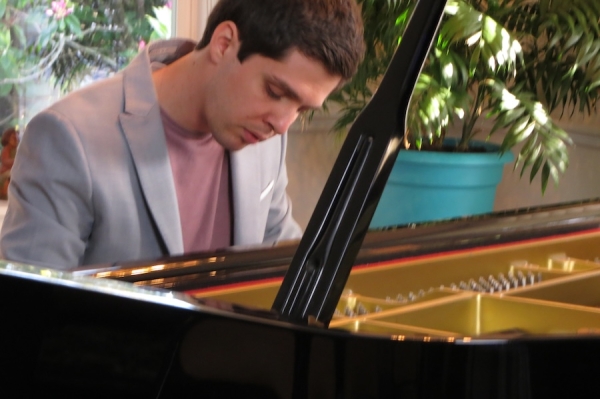
House concert at Kathy's house May 2017.
KP: Are you still able to work as a full-time musician or did you need to go back to work in the computer field?
SF: I’ve been very fortunate to work as a full-time musician for the last year and a half. I do have a financial runway that I must manage carefully, and it forces me to really think about where to best allocate the funds, whether it’s promotion and marketing, gear upgrades, hiring live musicians, or anything else. Running a small business is such an interesting puzzle of what to prioritize the most.
KP: I can certainly relate to that!
SF: Concert opportunities in the Bay Area have been keeping the full-time musician dream alive, with most of them being private events ranging from house concerts and weddings, to company gatherings and nursing homes, and many others. While I think I’ll continue to take these opportunities, I’d like to shift my attention more towards more public concerts where I get to share my original music with a wider audience.
KP: What kinds of things do you like to do when you’re not creating music?
SF: To be honest, being an independent musician does not leave much free time, but I make a conscious effort to create space for the other things that I enjoy. I love spending time with my wife and our 2 cats, whether it’s watching a movie, playing a videogame, or going somewhere nice in San Francisco. I also enjoy getting together with a few friends in the city whenever I feel the need for a larger social setting. I’ve also been traveling more often to Jordan and Poland to visit my family whenever my schedule and finances allow. And on weekend mornings, I tend to watch a good amount of soccer on TV, and recently got back to playing recreationally!
KP: If you could have any three wishes, what would they be?
SF: That’s a fun one! My first wish remains the same as it was since we last talked: to share the stories in my music with the help of a full band and orchestra in theaters around the world. It would be wonderful to have someone take on the logistical headaches of touring, and another person to transcribe all my songs into sheet music for a full orchestra, another to handle promotion/marketing, etc…
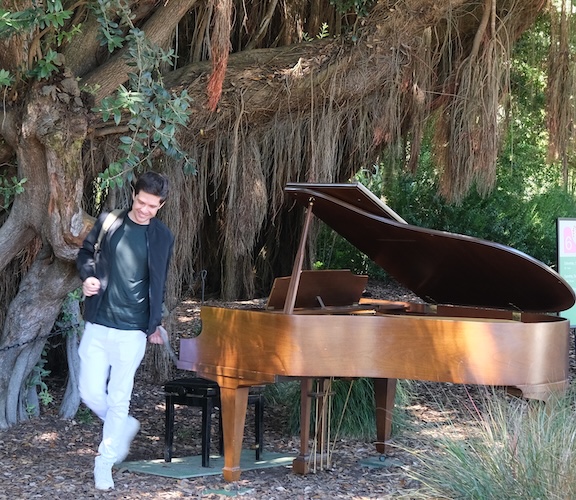
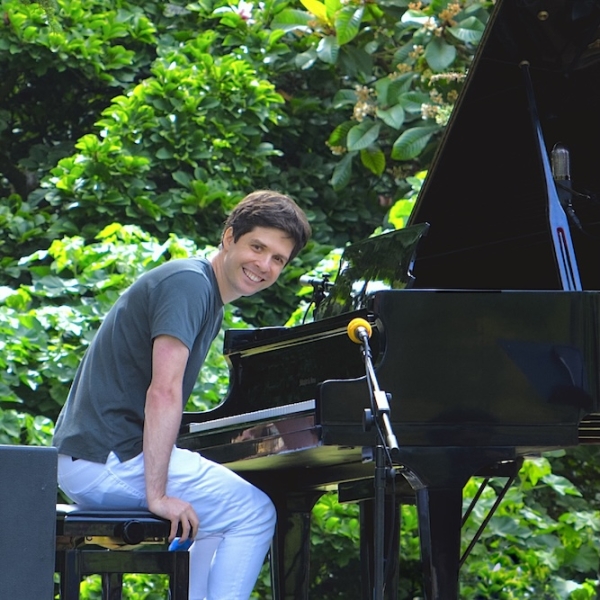
Playing at the San Francisco Botanical Gardens.
My second wish would be for instant teleportation so I can be with my family in Jordan in the morning and back to San Francisco for a concert at night. While many songs were created out of this longing, it also highlights an unresolved problem in my life that has become more apparent with each release.
The third one would be for instrumental music to naturally reach a wider audience and be appreciated as much as mainstream music.
KP: Sounds great, Samer! Is there anything else you’d like to talk about?
SF: Just that I’m really grateful to everyone who chooses to listen to and support my music. Every message, stream, concert attendance really keeps me going, especially in today's world where there is so much music being released every day. I also hope people find a story that resonates with them in their own lives with Forever Elsewhere. And thank you, Kathy, for giving me the chance to share a lot about it in this interview!
KP: Thank YOU, Samer! Hopefully we’ll be able to meet up soon when your tour comes up this way!
Many thanks to Samer Fanek for taking the time to do this interview! For more info about Samer and his music, be sure to visit
his website and his
Artist Page here on MainlyPiano.com!
Kathy Parsons
September 2025