Greetings and Happy April!
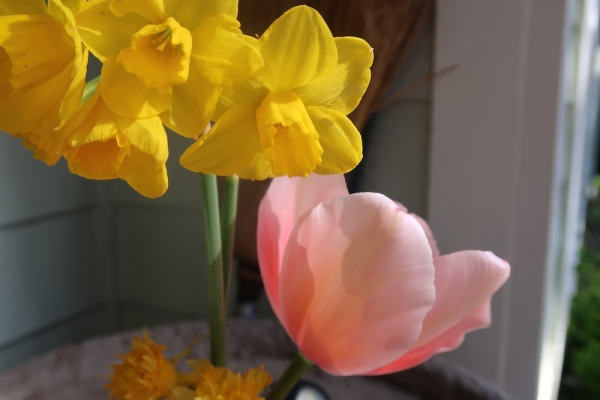
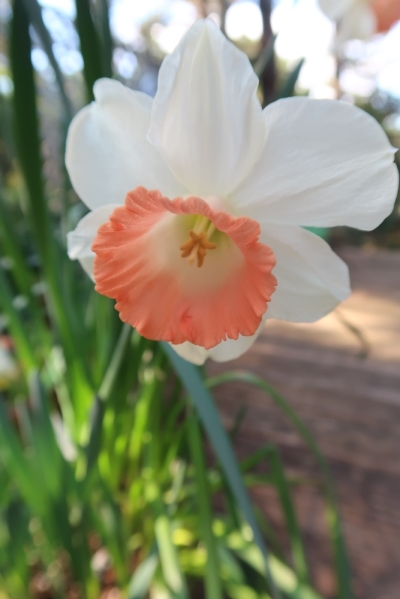
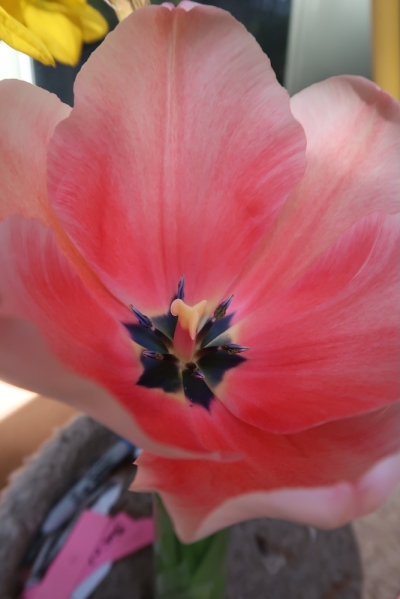
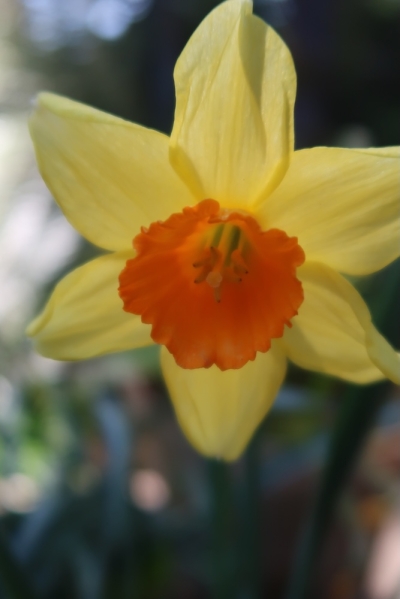
I hope early spring finds you well and enjoying an abundance of tulips and daffodils! It’s been another extremely busy month, but I have a lot of new “stuff” for you! Enjoy!
Mozart was the first great piano virtuoso (master). He also wrote the first piano duet in 1765.
When a leg of Margaret Truman’s grand piano broke through the floor of her room at the White House, her father knew it was time to move out. For the next four years, President Truman and his family lived elsewhere while the White House went through a top-to-bottom renovation.
In addition to inventing the piano, Bartolomeo Cristofori invented the "una corda" pedal (the soft pedal) in about 1726.
New Reviews: We have quite a variety of album and single reviews this month including new music from David Lanz, Michele McLaughlin, Michael Hoppé and many others. I also reviewed new songbooks by Michele McLaughlin and Brad Jacobsen as well as sheet music by Suzanne Herman, David Lanz and Tim Neumark. You can find links to all of them
here.
The piano stool that changes height when turned appeared by the end of the eighteenth century and can be considered an important landmark in the ergonomic design of furniture. If anything, it is too well adapted to children, who have always preferred spinning around on the stool to sitting on it to practice!
One of the earliest recordings of a piano performance was by Johannes Brahms playing one of his "Hungarian Dances."
Early pianos were made in small workshops where a single craftsman and a few assistants produced on a very small scale. Bartolomeo Cristofori was employed by a rich, music-loving prince, so he had the advantage of being able to build one piano after the next, adjusting his designs as he gained more experience. He was also able to train assistants, some of whom started their own workshops.
New Interviews: I did two really interesting interviews with artists that might be new to you. The first was with
Ryoka Hagiwara and the second with
Uriel Pascucci. Both are pianists who have won awards in international classical music competitions and also compose their own music. Ryoka was born in Japan, raised in London, and now makes her home in Scotland, where she is working on her doctorate. Uriel was born and raised in Venezuela and is now based in Switzerland. Many different influences, cultures and experiences go into their music, which I find fascinating! I’m currently working on a new interview with Wayne Gratz and hope to have it posted by the end of the week.
The first music for the piano was published in 1732.
In 1930, Koichi Kawai left his job at Yamaha to start his own piano building company.
In 1910, the US manufactured 360,000 pianos; Germany made 150,000; Britain made 75,000; and France made 25,000. This is considered to be the peak of the piano’s popularity.
April Birthdays: Here are some of the musical birthdays coming up this month:
4/4: Andy Mitran, Loren Evarts
4/5: Frank Horvat
4/9: Jim Chappell
4/11: Roth Herrlinger & Isabelle De Ferrari
4/13: Stacey Bonk
4/14: Milana Zilnik, Alejandro & David Clavijo
4/15: Anastasia
4/16: Josie Quick & Sean Michael Paddison
4/21: RJ Lannan
4/23: Michael Brant DeMaria & David Pena
4/24: Carol Nicodemi
4/25: Faith Angelina
4/26: Scott D. Davis
4/28: John Nilsen & Carolyn Southworth
As the piano evolved, English piano makers concentrated on a more powerful sound while the Germans concentrated on speed and subtlety in the responsiveness of their instruments, so the main differences between the pianos of the two countries was their actions.
Yamaha in Japan starting making upright pianos in 1900 and made its first grand in 1903.
An architect built an apartment building in New York in 1891 that had an upright piano built into every parlor.
Music Holidays and Observances: Need something to celebrate? Here you go!!!
All Month:
International Guitar Month
Jazz Appreciation Month
Weeks:
4/8-11: World Irish Dancing Week
4/12-19: International Trombone Week
4/16-22: National Karaoke Week
4/17-26: National Dance Week
4/29-5/3: International Mariachi Week
Days:
1 - National Trombone Players Day
3 - National Film Score Day & Fan Dance Day
6 - Waltzing Matilda Day
11 - International "Louie Louie" Day, Barbershop Quartet Day & National Eight Track Tape Day
16 - World Voice Day
19 - Record Store Day
25 - National Dance Day
29 - International Dance Day
30 - International Jazz Day
On some of the pianos of the early 1800’s (both uprights and grands), there were as many as seven pedals, including a buzzing bassoon stop, a muting moderator, a thumping and jingling military stop, as well as the damper and una corde (soft) pedals.
The first classical record to sell 1 million copies was a performance of Tchaikovsky's Piano Concerto #1 by Van Cliburn, recorded in 1958.
The pianoforte made its concert debut in 1768.
That’s all I have for you for this month! Happy Ester to all who celebrate it, and have a great month!
Kathy
The most prolific, versatile, and ingenious piano-inventor that ever lived was Jean-Henri Pape. He took out as many as 137 patents. His most useful ideas were the use of felt for covering piano hammers, and the device of cross-stringing the piano strings. He designed the "console" piano, a round piano, an elliptical piano, and a hexagonal piano. He also developed a piano that used springs instead of strings.
Clavichords and harpsichords first appeared in Europe at the beginning of the 15th century.
The first piano concert in New York was in 1773.
To the best of my knowledge, the "trivia" items are true, but I can't guarantee it.