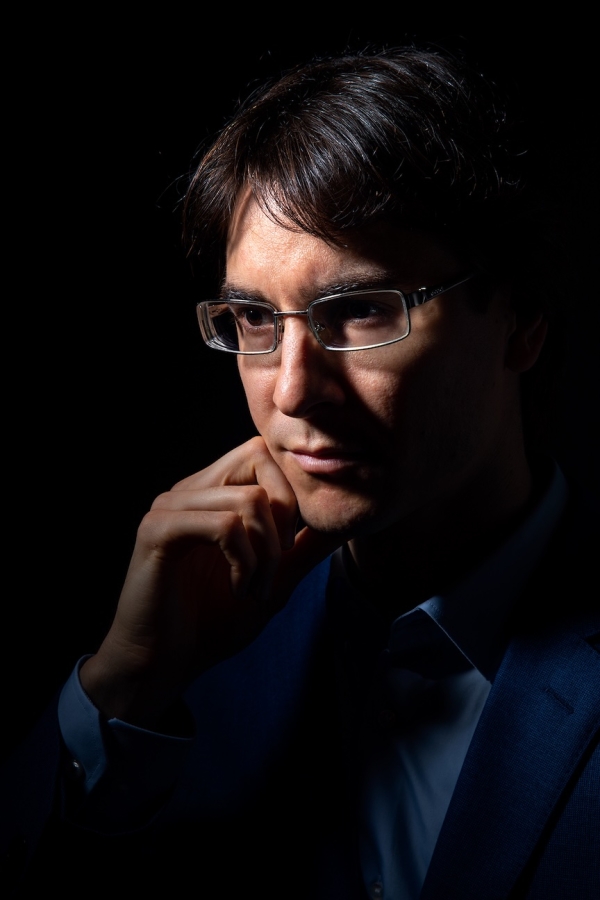
Photo copyright by Antira Herrmann
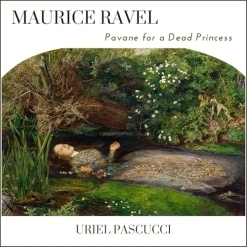
I first heard Uriel Pascucci’s music about a year ago when he sent me his recording of Maurice Ravel’s
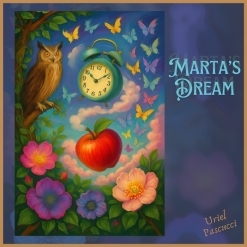
Pavane for a Dead Princess to review. I was very impressed! Not too long after that, he sent me single releases of a couple of his original piano solos - “Virutas” and “Marta’s Dream” - both of which recently earned awards from Clouzine Magazine’s International Music Awards. A few weeks ago, I reviewed his new
My Suitcase of Fragments, and decided it was time to get to know this composer better and to help spread the word about him. Uriel was born and raised in Argentina and is now based in Switzerland. His studies and performances have taken him to many places around the world, and all of those experiences have given him a fascinating perspective on the state of the music world in general. We did this interview via email in March 2026.
KP: Hi Uriel! How are you? And where are you these days?
UP: Hello Kathy! I’m doing well. Thank you for your time today! I’m in Europe right now, in the beautiful city of Basel. I’ve been living here for many years now. Basel is a small metropolis with a cosmopolitan spirit. It sits at the intersection of Switzerland, France, and Germany, with a mixture of both medieval and modern styles and influences.
KP: That sounds really interesting! Before we get into some of your more recent projects, tell us a bit about your background. Where were you born and when did you get your start with music?
UP: I am a musician from the end of the world, Argentina. My roots are planted deep in the sunlit soil of Luján de Cuyo, where I was born. it’s a small town in Mendoza. Classical music in Mendoza is a rare bird, seldom seen, barely heard. However, music found me anyway when I was still a child. People in my family generally listen to a lot of music, so there were plenty of recordings there at home right from the start. From the very beginning, music wasn’t a hobby, it was a universe. It gave my life shape and meaning, and choosing later to follow it professionally, coming from my quiet corner of the world, was as brave as it was irrational.
KP: It was obviously meant to be! Did you study mostly classical music as you were growing up?
UP: Yes. I have grown as a classical pianist mainly, but I’ve never lived in one musical house alone. Jazz, improvisation, tango, flamenco, composition - all these voices have shaped my language at the keyboard. My main studies, since my early years and later formally at universities, have always been classical music and piano. However, in my early teenage years I started to also take jazz piano lessons and a bit later, I also took composition lessons. They were never separate paths - they all grew together, constantly overlapping and shaping each other.
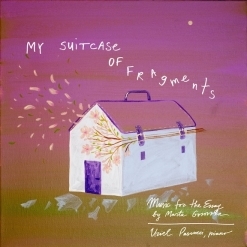
Click on album covers to
go to Kathy's reviews.
KP: I really believe that studying a wide variety of things related to your main course of study has a lot to do with forming a very original style and a voice unique to yourself.
Do you come from a musical family?
UP: I do not come from a family of musicians. However, I grew up in a family of true music lovers! Music was always present at home; they raised me on a collection of vinyls, cassettes and CDs. For example, my mother, who studied piano as a child, has a deep love for Maria Callas, for opera in general, and for classical music, and is open to many other music styles as well. And my grandfather, Salvador, is really passionate about opera and tango; he seems to carry the entire tango repertoire and its history within himself. In fact, he even met the great composer and bandoneón player, Astor Piazzolla, in person! My grandfather had a famous dancing club in the 1970s, a time when live musicians played while people where dancing. Typically, back then in Argentina, you would have a tango orchestra and a jazz orchestra on the same night. So he invited Astor Piazzolla to play at his club! This story is so meaningful to me and I have always treasured so much all the music that my grandfather shared with me. That’s why few years ago, as a tribute to my grandfather - a real man of tango - I dedicated one of my compositions to him called “Salvador Antonio’s Tango.” Stories like that are part of the musical world I grew up in.
KP: Very interesting! I was surprised to read that you studied at the University of Arkansas in the US. To be honest, I didn’t know there were any music schools in Arkansas! When were you there, and what did you study?
UP: My time in Arkansas, back in 2015 and 2016, was an intense chapter. I went there with a very clear and single purpose: to study piano under the guidance of Jura Margulis, a pianist and teacher who was then at the University of Arkansas. Our connection actually began earlier, in Germany, where I had the chance to join his legendary summer academy while I was already based in Europe. That experience opened the door to continuing my studies with him in the United States.
For me, coming - quite literally - from the end of the world, I must say that throughout my whole life there have been no paved roads, no guiding hands, only a stubborn belief and a relentless hunger to learn music. Finding the right teachers was never simple. Every step in my path has been built almost brick by brick, always searching for the pedagogues and musicians from whom I could truly learn.
I should also say that in Arkansas I had access to a personal practice room around the clock: small, windowless studios, each holding nothing but a grand piano and a bench. It was an All-Steinway environment and music school, and those quiet, focused hours became a world of their own. I learned an immense amount there. And beyond the practice rooms, there were the people, wonderful friends who made that time truly special.
KP: Where else have you done your musical studies?
UP: During my childhood I took private lessons in Mendoza, Argentina. Later, I did formal piano studies at the Universidad Nacional de Cuyo in Mendoza. After finishing them, I moved to Europe to go on with my piano studies at the Musik-Akademie der Stadt Basel in Switzerland.
KP: Have you done a lot of classical competitions?
UP: Yes, I went to several piano competitions in South America and in Europe. All of this took place in my twenties and thirties. On some occasions, I was fortunate to be awarded prizes in piano competitions. What probably stands out most were the First Prize at the XVIII Piano Competition “City of Necochea” in Argentina, as well as the Second Prize at the International Music Competition “London” and Grand Prize Virtuoso 2017 in England, among others. The prize in England led to a London debut concert at the Royal Albert Hall, in the Elgar Room.
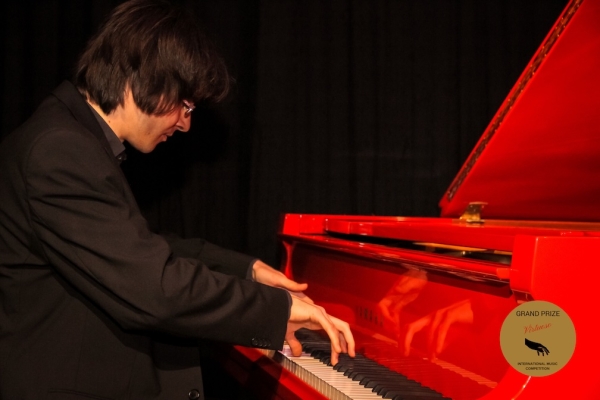
The bright red piano at the Royal Albert Hall.
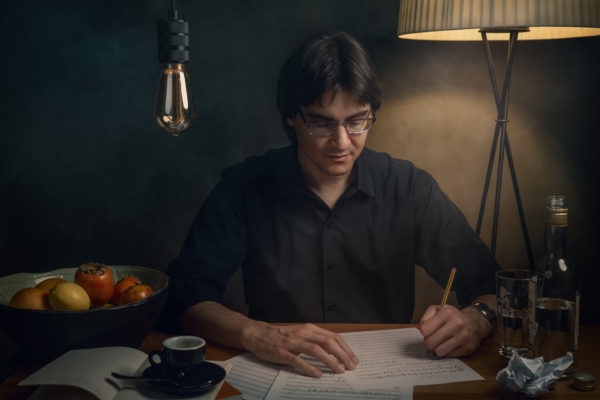
copyright by Tom Maeder
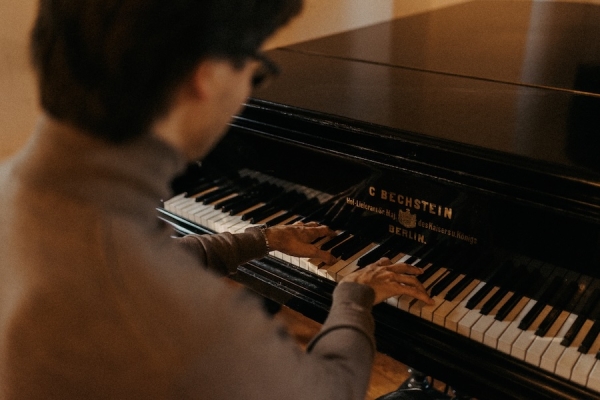
copyright by ana.g.photo
KP: When did you start composing your own music?
UP: From the very beginning, my connection with the piano somehow naturally extended into composition. I’ve always been drawn to the act of creating, to the sense of freedom it offers, and sound exploration. Composition is an ongoing journey of learning and discovery, one that demands time, focus, and discipline; it remains deeply rewarding.
Ultimately, I compose because I have to - it’s an inner need, an urge. I write and record as a way of giving form to ideas and to let them exist outside of myself. At some point, releasing them is also a way of letting go. I feel very close to what the writer Jorge Luis Borges used to say, that one publishes in order to silence the endless corrections.
KP: I hadn’t heard that before - a very interesting quotation!
How many recordings have you released including classical music as well as your originals?
UP: I have released two albums so far along with a number of single tracks. Plenty of them are my own original compositions. In many ways, this process has also opened up another dimension of my work: that of the music producer. Besides, some of these recordings are homages to great composers - for instance to Maurice Ravel and to Astor Piazzolla - while others are performances of classical music repertoire, and others explore more personal and cross-genre directions. I’ve been also fortunate to collaborate with wonderful musicians and sound engineers throughout these recording projects, which has deeply enriched the music and the journey.
KP: You recently released a fascinating project called My Suitcase of Fragments: Music For the Essay By Marta Gosovska. Tell us about it.
UP: I truly appreciate your kind compliment, thank you very much. Yes, we have very recently released the project
My Suitcase Of Fragments. It’s a full album for piano solo with my own compositions, based on the essay by writer Marta Gosovska.
In her deeply moving essay “My Suitcase of Fragments,” published by the Los Angeles Book Review in 2025, Marta Gosovska intertwines memories of Ukraine with the lingering wound of exile. Following the outbreak of the brutal Russian invasion of Ukraine, Marta was forced to leave her home. Like millions of Ukrainians fighting for their freedom, her life was irrevocably changed. Yet she transformed that pain into art, giving shape to her experiences through writing. What emerged from this album and collaboration is what Marta envisioned - a shared space where words, music, and art come together in dialogue, with exile as the core theme.
I felt that the most honest way to approach it was through the traditional architecture of an instrumental suite, giving each fragment of the text its own space and musical identity. The real challenge was to remain faithful to the emotional depth of the text, while at the same time allowing my own compositional voice to unfold naturally.
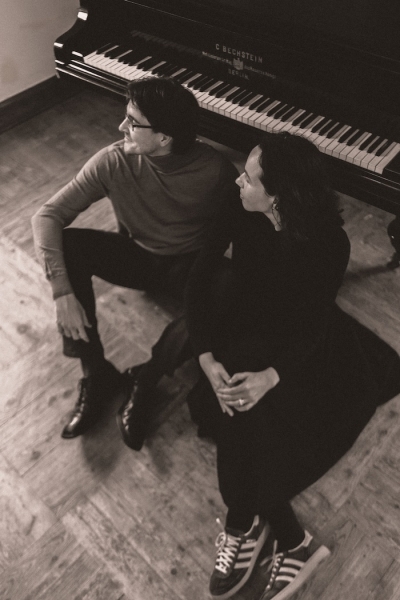
Uriel and Marta at the piano.
Copyright by ana.g.photo
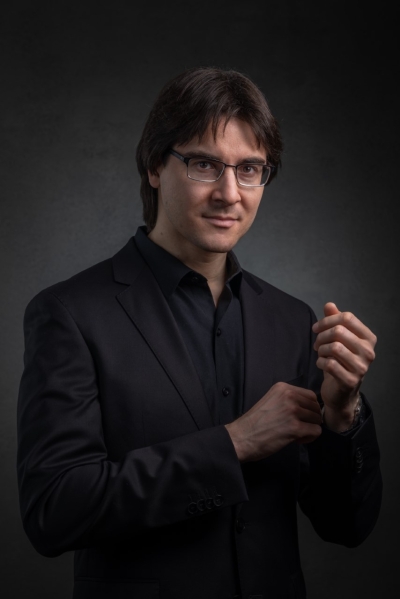
copyright by Tom Maeder
KP: You succeeded beautifully! How did you get involved in the project?
UP: I’ve always been drawn to interdisciplinary projects, and My Suitcase of Fragments is a very meaningful example of that. The writer, Marta Gosovska, approached me with the idea of composing music based on her subtle essay, and she is truly the driving force behind the entire project. Her text, very well written, revealed many layers of her life and childhood, deeply infused with a profound love for Ukraine, and it allowed me to understand the experience of exile from a very intimate and different perspective. This opened up my entire creative process, where I faced the challenge of finding the music within her words.
KP: I was very interested to learn that the artist who did the cover artwork for the album is one of the most prominent artists in Ukraine. Is she a friend of Marta’s?
UP: The participation of Nadiia Kushnir is an absolute privilege. It was, of course, Marta’s idea to invite her to join the project. I believe Nadiia’s painting for the album cover profoundly captures its tone, its resilience, its pain, and its quiet melancholy. In fact, we are continuing to develop more deeply the ways in which the three disciplines intertwine, especially for the album’s future live performances.
KP: That’s really interesting!
Last year, I reviewed one of your singles called “Marta’s Dream.” Is this the same Marta that inspired your new album?
UP: Yes, and by the way, thank you again for reviewing with so much detail that music release back then! I dedicated my composition "Marta's Dream” to my beloved Marta Gosovska. The piece is a blend of jazz and classical music.
KP: It’s a really beautiful piece and reviewing it was a pleasure!
You also recently won two awards from Clouzine International Music Awards for Spring 2026. One was “Best Instrumental Jazz Song” for “Marta’s Dream” and the other was “Best Flamenco Song” for “Virutas.” Tell us about that.
UP: It's an honor to have been named a double award recipient at the Clouzine International Music Awards Spring 2026. These are international distinctions celebrating independent artists from around the globe. Clouzine Magazine gives awards to recordings across a wide spectrum of genres and cultures, selected by an international panel of press and music professionals.
I would like to add few words about the two compositions that have been awarded the prizes. “Marta’s Dream,” as I was saying before, blends modern jazz with classical music. This composition moves freely between lyricism and surprise - just like a dream that changes shape as it unfolds. It’s really different from my composition “Virutas,” which is a Flamenco Bulerías piano solo. Like the wood shavings suggested by its title, the music was composed by request of the writer, Raquel Aznar, for the presentation of her book Virutas – El Carpintero del Pueblo (Wood Shavings – The Village Carpenter). The piece is based on the book and gives musical voice to the story of a Spanish immigrant who made his life in Argentina. This is yet another interdisciplinary project I am proud to be part of.
KP: Fascinating!
Flamenco, jazz and classical seem to be quite different stylistically. It seems like here in the US, mixing or combining genres of music and/or being proficient in several genres is almost frowned upon - especially in some of the classical circles - while many of the European artists I know and have reviewed seem much freer to mix and match musical styles to create their own. What has been your experience with this?
UP: This opens up an interesting discussion, let’s go little by little. To start and at a deeper level, there is ultimately ONE music. Music styles, genres, assert themselves strongly for a time: they define eras, shape identities. Music styles are born, cultivated, and eventually absorbed into the cultural canon; yet during their original splendor and especially once it fades, so to say, they open a space in which composers can reimagine them and carry them into new expressive realms.
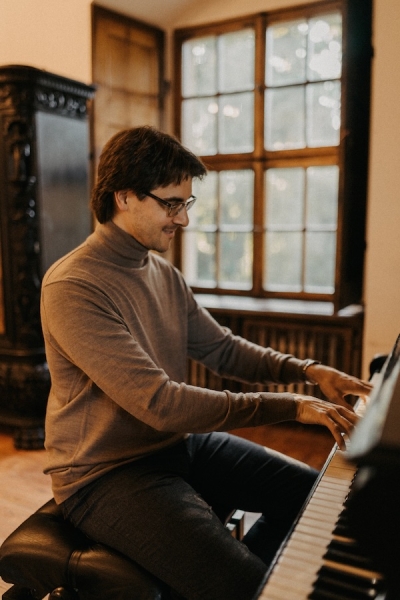
copyright by ana.g.photo
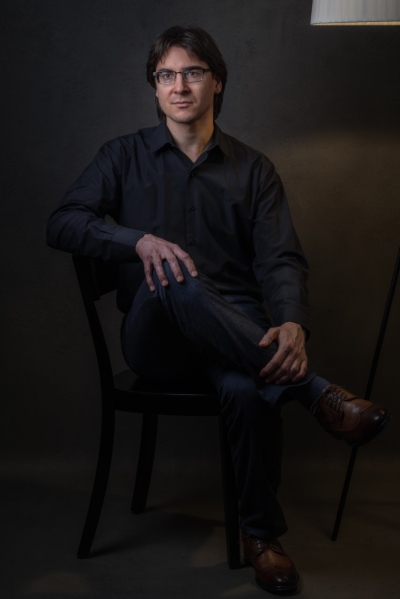
copyright by Tom Maeder
These different traditions are not about juxtaposition, but about understanding their inner language and allowing them to resonate in new ways. As you were saying, genres such as flamenco, jazz, and classical appear to be quite distant from one another stylistically, and yet they have informed each other through time and are expressive branches of the same big tree of music. One might consider the musical approaches of, for example, Manuel De Falla, Isaac Albéniz, Antonín Dvořák, Béla Bartók, and George Gershwin, each of whom infused their language with new colours and influences, enriching their sounds in distinctive ways. One could easily extend this list to embrace other sensibilities and discover even more varied examples, such as Chick Corea, Astor Piazzolla, Miles Davis, Leonard Bernstein, Queen, and the names would continue to unfold, as each of us can readily think of artists whose richly blended influences have left a meaningful imprint on culture.
For these reasons, and in the broadest sense of the term, I believe fusion represents the future of music. We are living in a moment where all “isms” are dissolving across the arts, and creation increasingly emerges from a fluid, cross-genre perspective. Maybe in Europe there may be a slightly more natural openness toward cross-genre exploration, or at least a longer-standing acceptance of it within certain artistic circles. But ultimately, I feel this is less about geography and more about a broader shift of our time - it’s evolving. And there will always be artists who embrace a more purist approach, remaining anchored away from these free mixture situations, and perhaps this, too, is necessary. In classical music for example, we will continue to need musicians who bring into the present the voices of past composers, for many of them still speak to us with undiminished relevance today.
Besides, for a long time there has been a high value placed on specialization, purity of style, and deep immersion in a single canon. Being “too” versatile or moving between genres was sometimes perceived as a lack of focus or seriousness, rather than as artistic breadth. There’s also an institutional dimension to this built through years: conservatories, competitions, and orchestras often reward precision within a defined tradition, so crossing boundaries doesn’t always fit well into those frameworks. Anyway this vision is increasingly outdated. Mixture and fusion are being more and more embraced.
KP: My impression with this is that it’s mostly a marketing issue and everything needs to fit in a specific box or category. I can understand that to a point, as there is SO MUCH music out there and people need to know where to look for it and find it, but is it as much of an issue in Europe and Argentina?
UP: You are right, I agree. It seems to be an issue everywhere. There is, undeniably, a marketing issue. Streaming platforms tend to organize music into defined categories, and to some extent, this is understandable, as you also said. Catalogues, categories and genre labels can help orient listeners, especially now that we have access to so much music. We need this to map music evolution in our heads, too. However, we should be cautious not to let this necessary structure turn into limitation. I notice some genre categories set boundaries with a lack of precision or not enough clarity sometimes.
As listeners, we should resist the automatization of our musical choices. Algorithms, while convenient, often guide us progressively toward narrower trends, where marketing considerations can outweigh genuine artistic discovery. In doing so, we risk reducing the richness and unpredictability that music offers.
I believe we should remain active participants in our listening experience: seeking out new works, new pieces, new sub-genres, mixtures, discovering unfamiliar composers and performers, and allowing curiosity to lead us beyond predefined paths. Ideally, we would move toward a more open and expansive musical landscape, one that embraces genres and sub-genres. Furthermore, we should also give the proper visibility to all collaborators involved in the creative process and on recordings. At the present, there is still a lack of full transparency in this regard. Sometimes it’s hidden, or the information is partial, and that is something we should strive to improve in every music platform.
KP: Excellent points!
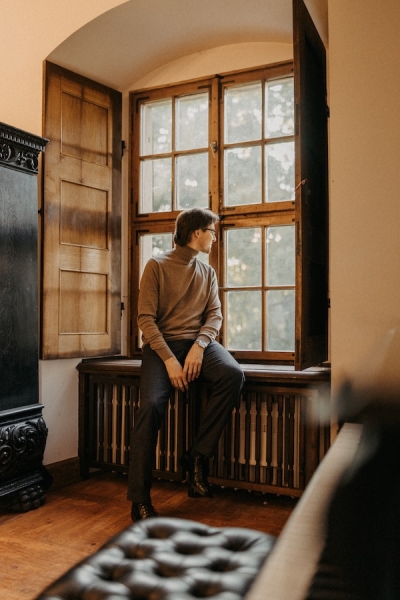
copyright by ana.g.photo
Did you ever play in rock bands when you were in your teens?
UP: Yes, I also grew up with the raw pulse of rock. During my teenage years, I played in a symphonic rock band, which was a lot of fun! I would say that through the years it has been interesting to perceive the dialogue between Baroque music and rock music. For instance, I have an already released composition, a collaboration project titled “Luz,” that is a kind of tango–rock piece that reflects my spirit of fusion. It’s a track I made with rock musicians and friends of mine.
KP: I’ll have to check that out!
UP: I would also like to say that coming from Argentina, it’s impossible not to acknowledge the richness of its rock tradition. There is a remarkable legacy of artists who have shaped generations with their creativity in Argentina. I am thinking, of course, of musicians such as Luis Alberto Spinetta, Soda Stereo and Gustavo Cerati, as well as Charly García and Fito Páez, among others.
KP: Who and what have been some of the strongest influences on your music?
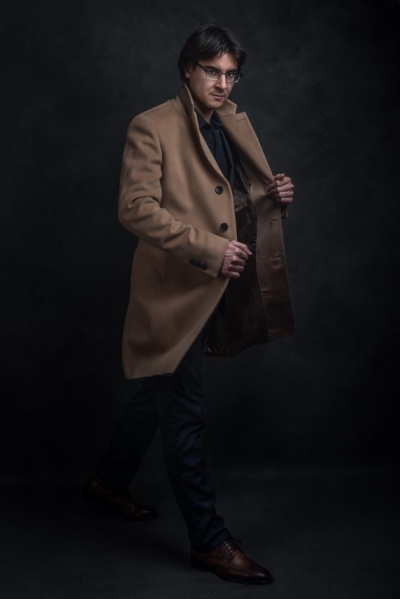
copyright by Tom Maeder
UP: I’ve been influenced by so many incredible musicians and composers, it’s actually hard to narrow it down. I have studied the work of many, far more than I could ever fully mention. But if I had to highlight a few, I’d say the following ones, to illustrate quite eclectic aesthetic influences: Maurice Ravel, Johann Sebastian Bach, Béla Bartók, Igor Stravinsky, Bill Evans, Miles Davis, Chick Corea, Astor Piazzolla, Queen, and Charly García. I choose these artists because each of them has left a deep mark on me, on my emotions, on the way I think about music, and through the contributions they’ve made to art itself.
KP: That’s quite an eclectic list of influences! Are you working on any new projects now?
UP: Yes, all the time..! A demanding aspect of being an artist is knowing what to practice, on what to focus, and when. I am constantly learning new repertoire, practicing, and preparing for recordings or concerts, while also composing. The balance shifts from month to month, I would say: at times one area requires more time than the others, and there have been periods when I have even worked on many compositions simultaneously. Right now, I mainly prepare to perform live my piano suite from the new album My Suitcase Of Fragments, as well as finishing a new composition, which I plan to record soon this year.
KP: Along with composing and recording, do you teach?
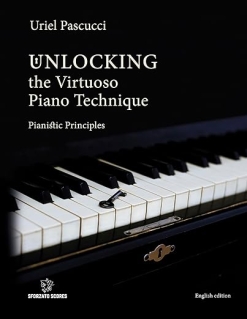
UP: Yes, by now I have over twenty years of experience in pedagogy. I have been primarily focused on one-to-one individual piano lessons, complemented by occasional masterclasses. Over the years, I have had the privilege of teaching across South America, North America, and Europe, working with students of diverse cultural backgrounds and at all stages of their musical journey. Besides, in recent years, alongside the traditional piano repertoire, I have also begun to guide students through my own book Unlocking The Virtuoso Piano Technique. The book has an English, a German and a Spanish edition. It brings together a set of exercises and principles centered on arm movement and the use of arm weight. In essence, it reflects a synthesis of what I have learned over time, offering piano students a clearer and more organic path toward technical development.
KP: Interesting!!! Who are some of your favorite composers and performers from any genre?
UP: Among classical pianists, I have long admired Vladimir Horowitz, Martha Argerich, Evgeny Kissin and Sviatoslav Richter. I also really like the pianists Chick Corea, Bill Evans and Keith Jarrett. Then I also like singers such as Edita Gruberova, Luciano Pavarotti and Freddie Mercury. I love the unmistakable guitar of Paco de Lucía, as well as the bandoneón playing of Astor Piazzolla, and the deeply expressive violin playing of Fernando Suárez Paz, who played along with Piazzolla for many years.
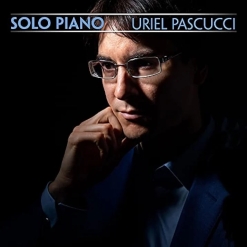
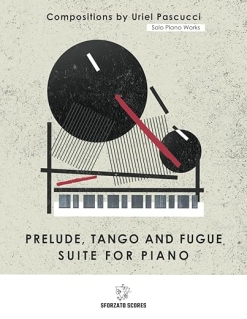
More by Uriel Pascucci - available on Amazon.
When it comes to composers, the landscape becomes even broader - perhaps too vast to define with precision. Still, I find myself returning again and again to figures such as Béla Bartók, Igor Stravinsky, Wolfgang Amadeus Mozart, Johann Sebastian Bach, Frédéric Chopin, Maurice Ravel, and again Astor Piazzolla, though there are many more..!
KP: What has been your music exciting musical moment or experience so far?
UP: This is really very difficult to say. Since I really love music, I feel in the moment and get a lot of enjoyment when I play music. I could probably say that I enjoy the most experiences like piano solo performances, recording sessions and those occasions through time in which I am fully involved into composing a piece of music. Those are all exciting musical moments for me.
KP: Is there a particular philosophy that you try to convey in your music?
UP: I translate universal life experiences and emotions into sound. I compose what I would personally like to listen to. My music is shaped by my fascination with counterpoint and my deep respect for the great composers of the past. I try to bring my heritage, my passions, and a modern ear into everything I play and write. My responsibility is simple but profound: to carry music to as many souls as possible, and, if the stars align, to transform a few along the way.
KP: What kinds of things do you enjoy doing when you aren’t doing music?
UP: As a child and teenager, I used to enjoy playing soccer and reading. Since I left Argentina, I have kept reading, however, it is never really as much as I wish. I also like watching movies, going to museums, and sharing quality time with my loving partner.
KP: If you could have any three wishes, what would they be?
UP: That invites a bit of imagination..! Well, things connected to explore sound, thought, and creation. One wish would certainly be to take orchestration lessons with Maurice Ravel - that would be quite something! Another would be to share a conversation with Jorge Luis Borges. Not necessarily to ask questions, but simply to listen to him and follow his thoughts. And perhaps, I would love to have a recording studio like the one the band Queen used to own in Montreux!
KP: Is there anything else you’d like to “talk” about?
UP: I am fully thankful for your time and interest on my work. I value the care you’ve taken in researching about my story so attentively, and for shaping your questions with such thoughtfulness. Fully appreciated!
KP: It’s been a pleasure, Uriel!
Many thanks to Uriel Pascucci for doing this interview! For more information about Uriel and his music, be sure to visit
his website and his
Artist Page here on MainlyPiano.com.
Kathy Parsons
March 2026